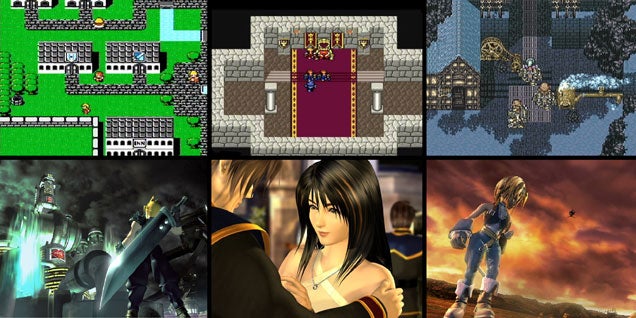
Over the past couple of decades, Final Fantasy has done many things very well: stories, characters, art direction, chocobos, all that jazz. But one thing has always made Final Fantasy stand out among its peers: the music.
Brian Tyler is doing more work with Marvel Studios. The composer recently provided the scores for Iron Man 3 and Thor: The Dark World. Now he will now provide the Avengers: Age of Ultron score. (Alan Silvestri scored The Avengers.)
Looking at Tyler’s resume he’s seems like a guy who works well with people in addition to writing a solid score. He’s done multiple installments of franchises such as the Fast and Furious and Expendables, in addition to his work with Marvel. He’s been in the business for nearly twenty years, and now Tyler seems to really be hitting his stride. (He’s also scoring Teenage Mutant Ninja Turtles,Fast and Furious 7, and Into the Storm.)
Avengers: Age of Ultron is in production now; it stars Robert Downey Jr., Chris Hemsworth, Mark Ruffalo, Chris Evans, Scarlett Johansson, Jeremy Renner, Samuel L. Jackson, Thomas Kretschmann, Aaron Taylor-Johnson, Elizabeth Olsen and James Spader, with Joss Whedon directing. Avengers: Age of Ultron will hit theaters on May 1, 2015. [FMR]
Nintendo will not have an official presence at PAX East next month, marking the first time since the show’s inception in 2010 that the Mario maker won’t attend the Boston industry event.
“Interacting directly with our fans and letting them play our games firsthand is a key component of our approach,” a Nintendo spokesperson told Polygon. “That doesn’t include PAX East this year, but we will offer our fans a variety of opportunities to get their hands on Nintendo products in 2014.”
Nintendo did not elaborate as to why it won’t attend this year’s event. The company also scaled back its E3 presence last year, trading its traditional main presentation for more intimate briefings.
PlayStation developer Sony is also not attending PAX East 2014, making Microsoft the only company of the “Big Three” to attend next month’s show. Other high-profile exhibitors include Ubisoft, Oculus VR, Twitch, Square Enix, Blizzard, 2K Games, and Double Fine.
PAX East runs April 11-13 in Boston, Mass. GameSpot will be in attendance.
Eddie Makuch is a news editor at GameSpot, and you can follow him on Twitter @EddieMakuch
Got a news tip or want to contact us directly? Email news@gamespot.com
Much has changed since we reviewed Diablo III at its launch in May of 2012, both in the game itself and in the PC gaming landscape. Now, those looking for great multiplayer hack-and-slash dungeon crawls have more options, like the colorful and appealing Torchlight II and the deep, grim, free-to-play Path of Exile. With these great games on the market that scratch the same itch, Diablo III is less essential. However, thanks largely to significant changes made in a recent patch in advance of the upcoming Reaper of Souls expansion, Diablo III is a better game now than it’s ever been, and is a worthy contender for your time if you’re looking to kill legions of monsters and score some sweet loot.
The recent changes to Diablo III are dramatic and immediately noticeable. After patch 2.0.1 was released on February 25, I took my level 44 witch doctor out for a spin for the first time in ages, and after playing for about an hour, I’d already collected rare and legendary weapons and armor that far outstripped anything I’d been using before. Gear is better now not only in terms of its base stats, but also in terms of its other characteristics. Whereas before, I tended to stick with the same few skills throughout the game, now, gear encourages me to switch things up periodically by offering hefty percentage bonuses to the damage done by a specific skill.
Some characteristics aren’t about increasing an item’s power but about doing other nifty things; a colleague of mine was able to equip a powerful level 60 weapon at level 47 because one of its attributes reduced its level requirement by 13. You find cool, useful stuff a lot more frequently now, which makes the whole process of collecting loot more exciting and rewarding, and the smart ways in which this loot sometimes encourages you to change up your build make for a more varied game. And with the controversial auction house now offline and with restrictions on trading legendary gear, you have to earn the best stuff yourself, which is the way it always should have been.
After advancing a few levels on the normal difficulty and never breaking a sweat, I upped things to hard to take advantage of the 75 percent bonus to experience and gold that comes with the increased challenge. This made for a more involving experience; on normal I could mindlessly slaughter most foes, but on hard I had to focus on what I was doing and use my skills in concert with each other to overcome some of the tougher encounters, marking enemies for death, setting up my sentry turret, and vaulting out of the way of enemy attacks. The difficulty system has been tweaked significantly since the game’s release, with monsters now scaling to your character’s level. As you get better at the game and improve your character’s equipment, you’re incentivized to up the difficulty to reap greater rewards in terms of gold, experience, and gear, and for the satisfaction of overcoming greater and greater challenges. I’m now facing the still-tougher enemies of the expert level.
Legendary items are far more plentiful now than they were before.
After once again vanquishing Diablo and starting over from act one, I hit the current level cap of 60 (which Reaper of Souls will increase to 70) and started earning paragon experience. Though the paragon system was introduced way back in patch 1.0.4, this was my first experience with it. I’m not usually much of an endgame player; once I’ve completed the story in a game, there’s not much appeal for me in continuing to play purely for the sake of earning better loot or increasing my character’s power. But I can see the appeal in earning paragon levels. With each level you earn, you get a point to spend on one of four tiers: improving your core attributes, your offensive or defensive abilities, or matters of utility, like resource costs and the amount of gold you find. Though you can earn paragon experience with a character only once that character has hit level 60, the paragon points you earn are given to each of your characters. Previously, Diablo III offered little in the way of opportunities to continue improving your character after a certain point, but now paragon levels, along with the prospect of better and better loot on harder difficulties, give you concrete benefits for continued play.
Fundamentally, Diablo III is still the same experience it’s always been. You click on monsters and press a few keys on your keyboard to unleash attacks to kill tons of monsters to collect heaps of gold and loot to become more effective at killing tons of monsters, and while the loot system has gotten a major overhaul, skills and runes work like they always have. The offensive skills of each class look powerful and feel empowering, movement is fluid, and the action is fast and responsive. Though its core mechanics are commonplace, Diablo III creates a sense of drama that helps it stand out. In the third act setting of Bastion’s Keep, massive demons claw their way onto the battlements, and as towering statues crumble around you in the high heavens, the turmoil supports the aim of the halfhearted narrative to make you feel like an eternal conflict between the angels and the legions of hell is culminating and that you’re right in the middle of it.
And of course, Diablo III is still at its best when you join forces with other players, combining close-quarters abilities and ranged attacks, crowd control abilities, and area-of-effect damage. Unfortunately, Diablo III still requires you to be online at all times, even if you’re content to play by your lonesome, and this sometimes causes problems. I’ve run into severe latency issues on a few occasions when playing the game recently, and though my character hasn’t perished, combat in these instances has been completely unmanageable.
Alot the Discordant hates it a lot when you kill him.
But this has been a rare occurrence throughout the 20 hours or so that I’ve spent playing the game since picking it back up after the recent patch, and because loot is such a central part of the Diablo experience, the significant improvements to Diablo III’s loot system have resulted in a significantly better game. If you played Diablo III when it was first released and haven’t been back to it in a while, you’ll immediately be pleased to find that the loot you’re collecting is consistently better and consistently more suited to your chosen class. If you haven’t played Diablo III before but you’re thinking of diving in before the expansion is released, you’re in luck: taking on the minions of hell has never been more rewarding.
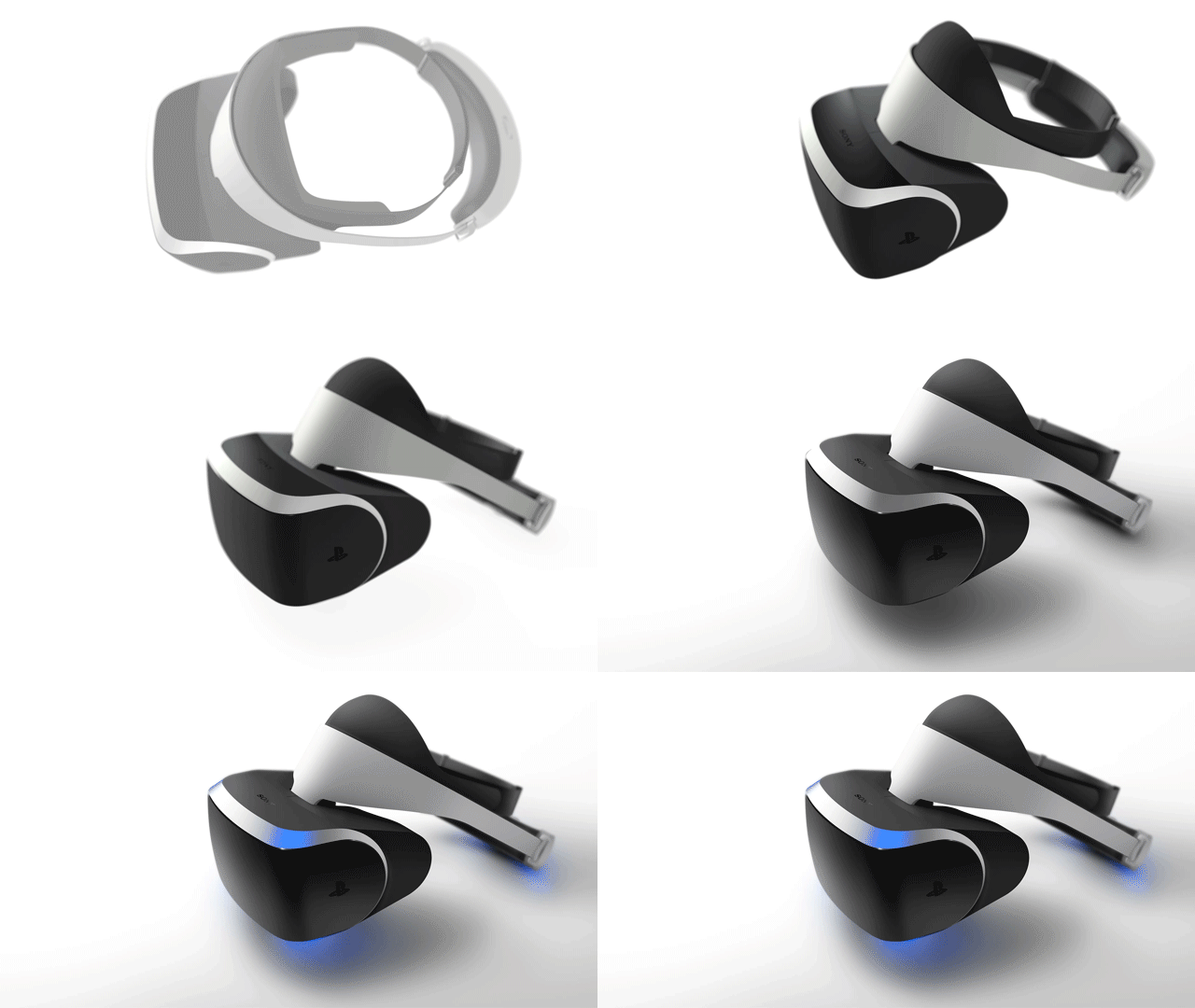
A couple of days ago, I felt like I was standing in a shark tank. Some time before that, Sony’s head of PlayStation game development, Shuhei Yoshida, fed a dinosaur and the company’s top PlayStation researcher, Richard Marks, stood next to the Mars rover—all in virtual reality, of course. With any luck, you will eventually be able to as well.
HBO has not yet made the fifth season of Game of Thrones an official thing, but you know that’s just a matter of formality. That’s especially the case now that writer/producers David Benioff and Dan Weiss have signed to continue as showrunners for two more seasons.
So while HBO will wait for an opportune promotional window to announce the fifth season of Game of Thrones, this is all the confirmation we need that the cable network will keep the show’s leadership going for the foreseeable future.
And why would anything be different? Game of Thrones is HBO’s most-watched show, and among the most popular TV shows ever made. There is no reason to change things up now, especially since Benioff and Weiss are the two people, other than creator George R. R. Martin, who know how the ‘A Song of Ice and Fire’ story ends. While Martin has yet to finish and publish the last two novels in the Game of Thrones story cycle, he has revealed key parts of the plot to the showrunners. That way they can plan for the future now, and there’s some contingency plan
The fourth season of Game of Thrones kicks off on April 6. [EW]
Need for Speed, the film based on Electronic Arts’ racing franchise and starring Breaking Bad‘s Aaron Paul, has cruised to over $100 million in total lifetime box office grosses. In the United States, the movie has banked $30.5 million, while international receipts total over $96.1 million.
Combined, Need for Speed’s worldwide box office performance so far has reached $126.6 million. The data comes from Hollywood box office reporting service Box Office Mojo.
Need for Speed had a $66 million production budget, so the film has now reached profitability, just two weeks after its initial debut on March 14.
According to the site’s Video Game Adaptation chart, Need for Speed is now the 18th best-performing movie based on a video game in United States box office history. The number one film, by a large margin, is 2001’s Lara Croft: Tomb Raider.
I saw Need for Speed and found it to be both great and terrible. Have you seen it? Let us know what you think of the high-octane action racing movie in the comments below.
Eddie Makuch is a news editor at GameSpot, and you can follow him on Twitter @EddieMakuch
Got a news tip or want to contact us directly? Email news@gamespot.com
From the desk of Ryu Hayabusa: “Why won’t he let me save the world? I just want to help people. And hug animals. And give lavender lollipops to children and old people. Mmm…Momiji’s thighs. No, I have to save the world. Where’s my binkie?”
From the desk of Momiji: “He’s got some hot woman helping him. I’m sooo jealous. Maybe I’ll kill her when I see her. Or maybe we can make out. Maybe we’ll have a threesome! I’ll do whatever Yaiba tells me to do. I’m so horny…”
These diary entries weren’t actually written by the attributed authors, but rather rose from the vivid imagination of Yaiba: Ninja Gaiden Z’s antihero. And they tell you much of what you need to know about this hack-and-slash game’s unlikable star, as well as its own sense of humor. Ninja Gaiden Z is crass and stupid but rarely funny. It’s mean and dumb but never witty or subversive. Listening to its characters speak is like hearing the inner workings of an 8-year-old’s mind–an 8-year-old who just discovered how to swear and can’t wait to drop his newfound knowledge at dinnertime. Puerile profanity and sexual humor can be appealing, and games like South Park: The Stick of Truth and MadWorld revel in their own lewdness to great success. By contrast, Ninja Gaiden Z flings swearwords and bawdy imagery and wants you to laugh because, you know, vaginas are funny.
Player character Yaiba is clearly not meant to be liked as he pursues his revenge quest against archnemesis and usual Ninja Gaiden star Ryu Hayabusa, but then again, no one comes across as particularly interesting or charismatic–not one-note guide Miss Monday, whose primary character traits are her monumental breasts, and certainly not the composers of the game’s compendium. Complaining of his wealthy boss, one author writes, “After six years of holding our dicks in our hands, finally that Spanish knobhead Del Gonzo authorized some action,” and later enthuses over his rising “blood-boner.” The alluring comic-book art style and initial gore are enough to inspire a momentary blood-boner, but sadly, the poor dialogue is not the game’s biggest deficiency.
No, that honor belongs to the action itself, which furnishes just enough fun to make you wonder how developers Comcept and Spark Unlimited allowed it to go off the rails so often. As cyberninja Yaiba Kamikaze, you wade through cartoon zombie hordes using your sword, your flail, your metal fist, and every so often, a weapon that downed foes drop, like electrified nunchuks or a rocket launcher. When encounters are kept simple, the action is immensely shallow, but satisfying in a button-mashy kind of way, in which you press buttons and blood splatters all over your television screen.
You’ll fight this big boy a half-dozen more times than you’d want.
My favorite standard weapon is the flail; using it gives the combat a God of War feel, and its long reach makes it useful for ripping through a large number of lurching zombies at once. The flail’s appeal is not found just in its ability to create copious amounts of blood, but also in its mass trauma capabilities, allowing you to make numerous foes simultaneously vulnerable to a gory execution. Such executions can be chained together in quick succession, with you pulling a shoulder button when one execution pauses to move on to another. Not only is there some innate glee in seeing zombie heads fly into the air and undead bodies split in half at the torso, but performing executions rewards you with refreshing red cubes that replenish your health meter.
As much as Yaiba’s flail recalls Kratos’ blades of chaos, Ninja Gaiden Z more resembles 2010’s Splatterhouse, not just in its cel-shaded look and sneering tone, but also in its absurd defects, which squash the fun and replace it with equal amounts of tedium and frustration. The irritations don’t arise from one design element, but from a mass of them that make Ninja Gaiden Z feel less like a cohesive action game with a clear rhythm and flow, and more like a series of disconnected concepts that don’t make any sense together.
Ninja Gaiden Z is crass and stupid but rarely funny. It’s mean and dumb but never witty or subversive.
Many of these elements are fundamental, and thus substantial, even when they seem initially minor. The fixed camera is a frequent problem, sometimes forcing you to traverse areas and fight off unseeable enemies without giving you a proper view of your surroundings, and other times swooping around when you cross a threshold in the midst of combat, disrupting the tempo of combat as well as the viewable arc of the combat arena. It’s even less fun when you begin one of many battles against a mechanical boss, in which its hulking metal body looms in the foreground, and you dash around behind it, hidden from view. You might even try dashing between its thundering legs, only to get caught up on an invisible collision box and be forced to take your lumps as you try to extricate your bruised body.
As if to mimic Ninja Gaiden’s famously high level of difficulty, Ninja Gaiden Z fills the screen with hulks that fling fire, jilted brides that sizzle with electricity, and mutants that puke bile in your direction. But where games like Ninja Gaiden Black gift you with precise combat systems that reward skillful play, Ninja Gaiden Z takes the shallowest and cheapest approach to difficulty imaginable, throwing so many of these enemies into the arena that skill is barely relevant. Sparking enemies teleport to your side and slap you around while you’re dashing about to snuff out the flames engulfing you; killer clowns knock you into submission when you’re rushing away from suicidal grenadiers. Blocking and countering certain attacks is possible, but is rarely a viable tactic given how quickly and randomly this mess plays out onscreen.
Time to stop clowning around, Yaiba.
Ninja Gaiden Z’s so-called chemistry set exacerbates the frustration. When certain elements come in contact with each other–the biological spew of a blister sister and the flames of a holy roaster, for instance–they cause interactions. The chemistry set is functional enough when you use it to solve the game’s mild puzzles, but the lightning storms that suddenly ignite on the battlefield when fire and lightning meet are more hazardous than the threats they alleviate. As a result, death is a frustration and not a teaching tool, and your primary method of healing–collecting post-execution health drops–is unreliable. The prompts to execute enemies might appear in the middle of one sword swing and vanish just as quickly when the second half of your combo rips the vulnerable enemy to shreds.
Gross!
This is one of many examples of how Ninja Gaiden Z corrupts its most interesting mechanics with subpar detailing. Executions satisfy the primal urge to squish mutated baddies, but they’re also gawky to watch, given how each chained execution is visually distinct rather than connected to the others. Performing a series of brutalities is more like viewing a series of incoherent three-second films than showing off your acrobatic expertise. Another of Ninja Gaiden Z’s best assets–its scripted, high-flying parkour sequences–are similarly diminished. Stringing leaps, grapples, and punches like the world’s most violent gymnast is an absolute blast; fumbling around with the finicky contextual jumps (indicated by a ledge splattered with blood) and camera angles that disrupt your sense of depth is not.
So much for that blood-boner, then, not that you’d be able to keep it up during the game’s first major showdown, which drops to single-digit frame rates in the heat of battle. Still, Yaiba: Ninja Gaiden Z keeps pumping out the blood, hoping to turn you on with its gory combat and vulgar attitude. Every so often, 8-year-old me–the part of me that thinks that asking everyone what word starts with “f” and ends in “u-c-k” is funny–got a kick out of Yaiba’s exploits. Most of the time, however, I could only wish that Ninja Gaiden Z’s striking art style had been applied to a better canvas.
These days, Marvel has a pretty amazing track record on the big screen. Even if you toss in the films produced by Sony or Fox, most of the movies range from okay to superb. But things could have turned out very, very different. Here are 10 bizarre Marvel film projects that were in development at one point.