In a surprise spate of sales for Nintendo’s last-gen system, the Wii version of Just Dance 2015 has propelled sales of Ubisoft’s title to sixth. That result shows that the seasonal appeal of the Wii still carries weight some eight years since the system’s release, and two years since Nintendo released the machine’s successor.
Below is the all-format top ten, as compiled by Chart-Track
PlayStation Plus, the monthly subscription service that offers free games across PlayStation 4, PS Vita, and PlayStation 3, theoretically represents an annual saving of more than $1,300.
Research undertaken by Push Square found that the individual PS Store prices of all PS Plus games in 2014 amounted to $1,349 in the US and £960 in the UK. Considering the annual subscription is $50 and £40, the saving can be substantial.
However, once a customer stops paying for PlayStation Plus, their entire collection of games acquired through the service is rendered unplayable until the subscription payments continue. Moreover, the games on offer are spread across three platforms (PS4, PS3 and Vita), meaning that players would need to be active on all three to get this level of value out of the service.
Also considered in the research is the quality of each game on offer, and though there is no ideal arithmetical way to do this, Push Square points out that the average Metascore of all PlayStation Plus games is 79 in North America and 78 in Europe.
Earlier this year, GameSpot recounted the strange case of Areal, a project that claimed to be S.T.A.L.K.E.R.’s definitive spiritual successor, but that was suspended by Kickstarter following accusations that included everything from missing assets, false claims to the series’ lineage, and, amazingly, a forged letter from Russian President Vladimir Putin.
Last week, that story got even stranger as the developers behind Areal, West Games, launched another crowdfunding campaign for a new project called STALKER Apocalypse. As you can tell by the project’s crowdfunding page, it’s pretty much the same pitch as Areal, only with a few new assets.
“We were formerly developing a game called Areal, but after raising funds on our website and listening to our fans, we decided to re-focus our vision, and develop what is now STALKER Apocalypse (trademarked),” West Games said.
The developer is hoping to raise $600,000 through World Wide Funder, a little-known crowdfunding site that, unlike Kickstarter, allows projects to keep whatever amount of money they raise, even if they don’t reach their goal. Areal, by comparison, was only looking to raise $50,000.
Note that it’s STALKER and not S.T.A.L.K.E.R. like the original (though one could be easily confused by the placement of the screws in the project’s logo), which West Games believes clears it of any legal trouble.
“We have registered a trademark for Stalker Apocalypse, and have every right to use it as our title,” it said. “Stalker by itself is a common word, and anyone can use it.”
As the legally-minded blog GamerLaw points out, that doesn’t mean West Games is in the clear. The developer might have registered a trademark for Stalker Apocalypse, but if the name and products are similar enough to potentially confuse consumers into buying Stalker Apocalypse when they intended to buy S.T.A.L.K.E.R., it could very easily mean legal trouble for West Games.
So far, the project has raised $7,006 from 166 backers. West Games said that is being made with Unreal Engine 4 for the PC, Xbox One, and PS4.
Whether or not you know the name Koji Kondo, if you’re reading this on GameSpot, you definitely know his music. The Nintendo composer is best known for creating the iconic Mario and Zelda themes. But the prolific creator continues to work crafting melodies and helping raise up a new generation of musicians at Nintendo.
He’s currently working as the composer for Mario Maker and a supervisor for Nintendo’s third-person shooter Splatoon, but he also took time out to play a few songs at the recent The Game Awards event in Vegas. Before that performance, we took a few moments to catch up with him about his work, where game music is going, and memorable moments from his past.
GameSpot: How has making music for games changed over the years?
Koji Kondo: I think a few things have changed quite dramatically. With the advance in computer technology and hardware evolution, we’re seeing a shift from what we maybe consider very computer-esqe music back in the day to being able to use actual instrumentation and create music that’s performed by whole orchestras.
That used to be a solo gig where I’d compose the music and create all the sound effects that we were going to use. And now we’re actually hiring professional musicians, bands, or orchestras to come in and perform the music. Record and implementing that into the game, those are the biggest changes that I’ve seen.
Do you think that trend toward live music is going to be more prevalent in games versus having a single sole creator?
I don’t think it’ll become the standard or anything like that. If it works for the game, and it’s the best music for enhancing the gameplay, then using live performances like that and real musicians will work. But I think in other games, computer-generated music will fit the bill better. So it’s really about what works with that individual game.
How do you decide which is the best fit for a game?
For example, take a game like Super Mario Galaxy. I really felt that, based on what we were seeing in the game and the scale of the game, something more than just a synthesizer or computer-generated music, in that case full orchestration, would better suit the game that I saw on screen. It would really bring that large-scale feeling to life better. It’s about what fits what we’re seeing on-screen.
Of course, some of your early 8-bit music was still thematically huge. Works like the Mario theme and the Hyrule overworld theme are as popular and enduring as some classical music. Did you ever consider when you were creating those tracks that they’d become so recognized around the world?
No, I never in my wildest dreams imagined that those songs would become what they are today. My focus at that point was really just to make music that would enhance the gameplay. I was just trying to do my best to make music that would make the games more fun. And that really was all I was doing.
To think that it was 30 years ago that we did the Super Mario Bros. theme and now it’s known worldwide, and people seem to appreciate it across the globe. You can go onto YouTube and see all kinds of people using all kinds of instruments and different orchestrations of these songs. It was not expected, but it makes me very happy.
You can go onto YouTube and see all kinds of people using all kinds of instruments and different orchestrations of these songs. It was not expected, but it makes me very happy.
So you seem to be a fan of some of the artists who repurpose and rearrange your music?
Looking at the variety of re-imaginings that you can find, I think it’s pretty amazing. It makes me feel like there are a lot of super-talented people out there bringing that to life. So I think it’s pretty cool.
As a composer, what do you think it is that’s made the melodies you’ve created so enduring?
I think when I’m making music, and by that I mean game music, one of the things I focus on is making music that people won’t grow tired of. So I would create a piece of music, and one thing that I do is listen to it over and over and over and over and over again. If I find myself getting into the music without growing tired of it, then I think, “Ok, this has the potential to be something that we can use.” It’s that attention to detail that I pay as part of my own creative process.
You’ve talked before about some of your musical inspirations, but has that changed at all. Where have you found inspiration recently for your compositions?
I don’t think that I could point out any specific artist or genre. I just try to listen to lots of different kinds of music. Everything from classical to jazz to lounge and techno, just a wide spectrum of music.
I don’t have anything that’s on heavy rotation on my iTunes, and I’m not listening to my own CDs all that often. I really just have Internet radio stations, and I flip the channels so that I hear a wide variety.
Do you get the chance to play many games, or is there much game music that you listen to?
I don’t really have a lot of time to play many games, so I haven’t been exposed to a lot of recent game music. Except, of course, for the games that I’m working on myself. The games that I’m involved with and the games that Nintendo is responsible for, I definitely get a chance to take a look at and experience those.
Have you ever considered branching out and doing your own solo career or making music for some other industry?
I really want to keep working on the evolution of game music. That where I hope to be and where I hope to stay.
Well, my music is game music. I don’t know that I can separate those two. If you ask me what I want to do, it’s keep creating. That’s fun for me. I wouldn’t even really know what my music is outside of game music. For me, it’s fun, it’s challenging, and I really want to keep working on the evolution of game music. That where I hope to be and where I hope to stay.
The chance to perform live here at The Game Awards is so different from the experience of creating game music. Is it something that makes you nervous, or are you really looking forward to it?
I’m definitely nervous. But that being said, when I’m on stage, I’m able to see actual peoples’ reactions to the music. And, of course, I can’t see the customers that purchase our games. I can’t sit in their homes and watch their reactions to my music. So being on stage and getting to see how they react and what they feel from hearing the music is something that’s pretty neat. I’m looking forward to that.
Going back to creating music, how long does it typically take you to compose a melody or put together a score?
The timeframe it takes is really different for each piece of music that I create. Sometimes I’ll see the art assets or see something in the game and, “Bam!” the music comes right to me. Other times it takes months, and I’m still not coming up with anything. Then I’ll be working on something else, and the melody will just pop into my head while I’m doing that.
For example, with Zelda, if there’s any sort of cinematic that I’m able to view, anything that shows an emotional point in the game, those scenes are the ones that allow me to come with ideas more easily.
I think the thing that really takes the longest time is coming up with the main theme for a game. Part of it is that it’s something you’re going to be hearing a lot, and also it has to capture the core element of what’s enjoyable or interesting about that game. So the main theme is usually the portion that takes the longest for me to compose.
Is there anything special that you do, or maybe anything peculiar you’ve had to do before to get the perfect melody to come out?
I think sometimes those main themes just sort of pop out of the blue. Like something that’s been delivered to me out of the sky. A bolt of lightning or what have you. But other times maybe I’m in the bathtub, and I’ll hear the melody line in my brain.
Really, for me personally, a lot of times, when I’m trying to create the main theme for a game, I’ll hear what eventually becomes that theme when I’m not consciously trying to come up with it. There have been cases where I’m walking down the hallway in my house and I hear some music in my head, and I feel like, “Yes, that’s it.” Then the next day I play it back and I say, “What was that? That’s not what I needed at all.” But I think as far as any special technique, it’s more about not actively thinking about it when a lot of that music comes to me.
Is there any particular type of game you prefer creating music for?
Maybe for the Legend of Zelda. Because of the variety of the worlds and the landscapes that you encounter within the game, it allows me to imagine musical types that I’ve never heard before. I get to work with a lot of different genres to meet the variety of the worlds and landscapes I’m seeing within the game. So I really enjoy working on that franchise a lot.
When a remake comes up for a game like that, like the upcoming Majora’s Mask 3D, do you add or tweak anything, or does the music mostly stay the same?
Actually, with Majora, we thought it was really important to protect the feeling of the game because the music was tied so well to the original gameplay. We’ve done some clean up on the audio quality, but the music itself we haven’t changed.
We did some rebalancing, of course, to make it sound good on the Nintendo 3DS. Before you were hearing it out of you TV speakers, and we just needed to do some rebalancing for that now that it’s on a handheld.
Majora’s Mask is my personal favorite Zelda game. Are there any particular stories that you remember from the during the game’s development?
That’s always a tough one.
But when I saw the very first mask you see in Majora, I saw that and it really brought to mind for me, for whatever reason, a type of Chinese opera. The kind where the performers wear masks and the music is all percussive [makes the sound of a cymbal being struck rhythmically], and there’s a lot of cymbals and bells and what not. Those two linked up when I first saw Majora’s artwork, and I thought a Chinese-influenced theme would be the way to go.
Something else I remember is in the scene where the mayor is sitting and you have the two sides having a discussion over the top of him. He’s sitting in the middle of his office, and you have the people on the left talking about something, and then the people on the right, and there’s this discussion back and forth. I had a lot of fun making the music feel like that argument so that you’d have music pouring in from the left speaker and then music coming in from the right speaker. That back and forth was a lot of fun to create.
When you hear music in the game, it’s the finished product, so it always feels like the right fit. But do you ever have a disagreement with the director about what music is best for a particular scene?
Yes, sometimes there are disagreements on what music is correct or appropriate. With Majora, the director didn’t sit and say, “This is the kind of music I want.” He wasn’t super hands-on, so I was able to create the kind of music I thought was appropriate for the game that I was seeing. And I figured that if no one was complaining, because I was creating quite a bit of music, then it must have been OK.
So I just kept going in that direction. However there was one area where a fox was dancing, or something with a fox, where the director came up and said, “I’d actually like this to feel more Japanese.” The feeling that the director was getting from what he was seeing on screen was just different from the impression that I got. But I did go back and look at the scene, and I understood more what he wanted after that. So I redid that music.
Since your job has evolved a lot of over the years, do you prefer taking a more supervisory role, or do you still like to get in and create the music yourself?
I do like being in a role of giving direction; it is a lot of fun. Because I have a staff that really reaches out and creates music that I personally wouldn’t have imagined or stuff I wouldn’t have created, it’s really interesting to hear what they come up with.
I have to say that while creating music is fun, and I do like doing that, it’s also tough work. There are times when it’s really difficult and not all that pleasant. As someone who gets to listen to what others have created, I get to escape from having to endure some of that hardship myself.
Speaking of creating music, for something like working on Mario Maker, does that involve a lot of original composition, or do you use more tunes that bring about the memories of previous games?
Basically, you’re looking at three different types of music for Mario Maker. When you’re in the gameplay mode of the original game itself, you’ve created your stage and you’re playing that, you’re going to hear the original music from the original game. In the editing mode, when you’re working on something that was present in the original game, you’re going to hear a re-imagining of that original music. So we have the original music, we have some re-imaginings of that music. And where there are portions of the game that are completely new to Mario Maker, that’s brand-new.
As someone who’s supervising the direction of the music, I try to put myself into the player’s shoes and I ask myself, “Does this music fit with what’s happening? Does it do what the game wants it to do?”
Are you working on the next Zelda theme as well, or is that coming from a separate team?
I’ll be supervising and looking over that, but I’m not actively composing for the game.
My final question, when you’re working as a supervisor on something like that, when do you know when it’s ready for the game? When do you let it go?
We look at whether the music has achieved its goal. Whether the music’s designed to emphasize a certain action on screen or if it’s designed to entice vocal songs or something like that. We just have to look at what the music is designed to do within the game.
Sometimes the creator has a tough time doing that. Because they’re so close, they’re so deep into the music themselves, they’re unable to look at it from the player’s point of view. So as someone who’s supervising the direction of the music, I try to put myself into the player’s shoes and I ask myself, “Does this music fit with what’s happening? Does it do what the game wants it to do?” But the composer is still concerned with the music itself. So I try to look at it and give advice from that viewpoint. Whether or not it’s achieving the goal, and whether or not that’s clear from the player’s viewpoint.
The GX3: Everyone Games convention will take place on December 11-13, 2015 in the San Jose Marriott in San Jose, California, GaymerX’s has announced.
Those who backed the event on Kickstrarter should get a ticket code in their emails by the end of the day, but you can also buy tickets from the GX3 Eventbrite page at a special pre-sale price. Starting on December 17, GaymerX will also put up a booking page where you’ll be able to get discounted rooms at the San Jose Marriott.
“Not only will GX3 have incredible guests, including one of this year’s Bosses of Honor, the voice of Commander Shepard from the Mass Effect series, Jennifer Hale, but we’ll also have a grand host of gaming festivities for everyone, from panels, tournaments of the gaming and tabletop variety, live music, and cosplay,” GaymerX said. “You’ll also have a chance to play games from some of our sponsored attendees, too, and hopefully some really cool games made at GXdev!”
Other “Bosses of Honor” announced so far include Zach Weiner, creator of webcomic Saturday Morning Breakfast Cereal, Ellen McLain and John Patrick Lowrie, voices of GLaDOS and Team Fortress 2’s Sniper, and Rob Jagnow, co-creator of the hit games Cogs and Extrasolar.
The organizers’ official name is still GaymerX, but this year’s convention is nicknamed GX3: Everyone Games to make clear that everyone who’s 18 or older is invited.
Following the Capcom Cup tournament, Capcom producer Yoshinori Ono came on stage both too introduce the first live Street Fighter V match as well as reveal that Charlie Nash will be a playable character in the PS4/PC-exclusive Street Fighter V.
Charlie Nash’s glasses
While Capcom is working on Street Fighter V, Ono promised to continue supporting Ultra Street Fighter IV next year. Ono also announced that the prize pool for next year’s Capcom tournaments will be increased to $500,000.
Ono as Charlie Nash
The original story appears below.
On Saturday, December 13, Capcom is hosting the finale of their Capcom Cup Ultra Street Fighter IV tournament here in San Francisco. You can watch the entire event live through their Twitch channel above, but the bigger reason for fans to tune will be to catch the first broadcast of a Street Fighter V match.
After handing out the $50,000 prize pool winnings for the tournament, Capcom is set to reveal some “special announcements as well.”
Here’s the full schedule of events (all times PST):
Killing Floor 2 is coming to the PlayStation 4 because games are much more expensive to make these days and Sony has opened up the platform to independent developers, Tripwire Interactive has said.
“We love the PC as a platform and have been championing it for years, even in the dark days of 2005 when all the press could talk about was how the ‘PC was dead.’” President of Tripwire Interactive John Gibson said in a post to the company’s forums. “We’ve been very successful on PC selling million of games, and we’ve no intention of leaving the PC or relegating the PC to a ‘second class citizen.’”
Gibson gives three main reasons for why Killing Floor 2 will be the company’s first game to release on a console. The first reason, he said, is that the current generation consoles are more powerful, and have an architecture much more similar to a PC, a sentiment we’ve heard from other developers as well.
Secondly, Gibson said that Tripwire decided to work with Sony because it allowed it to remain “fiercely independent,” whereas previously other console manufacturers wouldn’t work with Tripwire unless it went through bigger publisher.
Finally, Gibson said that games are just much more expensive to make now. “When we made [Red Orchestra] we had 4 employees, [Killing Floor] we had 11 employees, [Red Orchestra 2] started with 7 employees and got up to 25 by the time it shipped,” Gibson said. “[Killing Floor 2] is being developed by 50 people. With game development costs rising it is very important as a business to make your games available in as many places as possible, to as many potential customers as possible.”
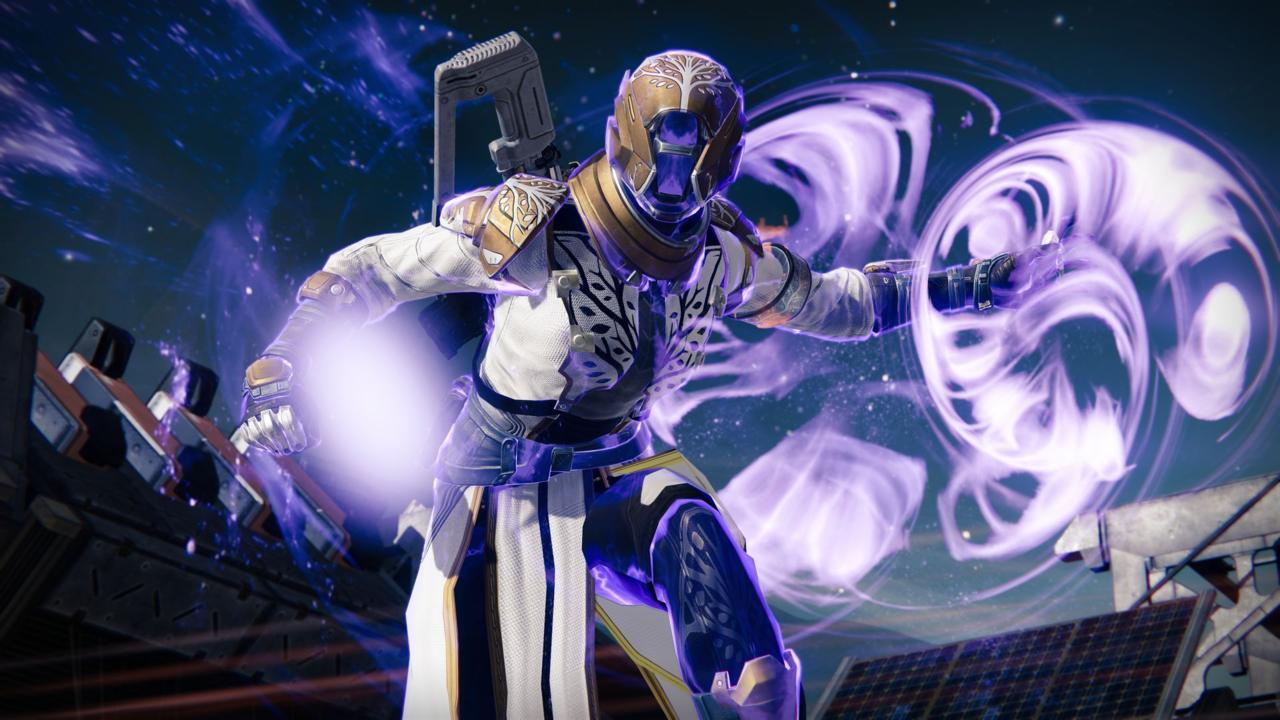
Bungie is banning players that have been playing Destiny on modded consoles, the developer has confirmed in its most recent weekly update.
“We routinely review Banhammer actions to ensure that they are applied accurately and fairly,” Bungie said. “A review of the bans applied over the last week shows that all of the affected accounts had logged into Destiny on a modified console at some point.”
Bungie didn’t explicitly say that the banned users were using their modded consoles to cheat, but it’s safe to assume that is the case. A quick search on YouTube will reveal several videos of players using god mode, no cooldown, infinite ammo, and increased movement speed cheats on what appear to be modded last generation consoles.
“Be careful out there,” Bungie said. “Play nice! And use the boxes that your favorite retailer ‘gave’ you.”
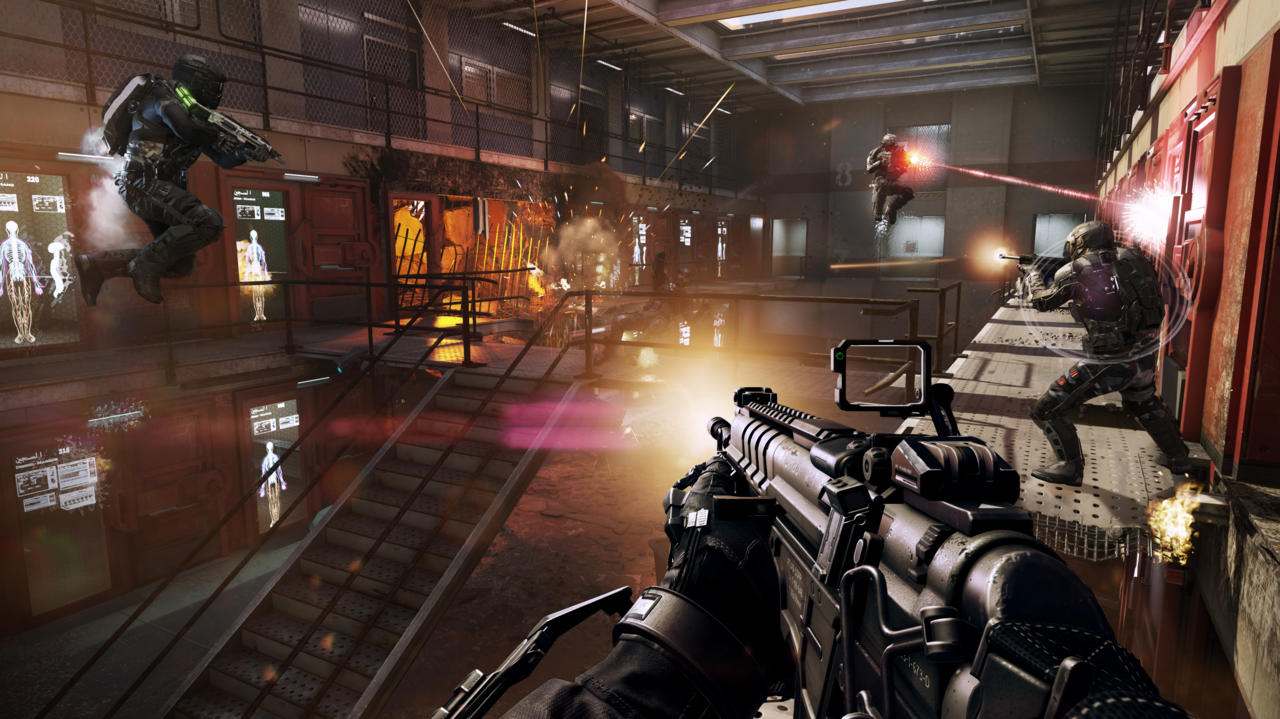
Call of Duty: Advanced Warfare was the best selling game for November according to the NPD, but the military first-person shooter continues to decline in sales compared to recent years.
Street Insider (via Gamesindustry.biz) reports that Piper Jaffray analyst Michael Olson said Activision sales fell 22 percent compared to same month last year, and that Call of Duty sales specifically we’re down 27 percent.
“NPD data does not include digital copies or international sales, which, if included, would lessen the decline, but we believe this data suggests potential for Q4 revenue upside is now very low,” Olson said.
However, Olson added the Blizzard’s strong performance with World of Warcraft and Hearthstone should allow Activision to meet its expectations for the quarter.
Activision CEO Eric Hirshberg also previously insisted that the purchase intent for Advanced Warfare was “significantly above” Ghosts. However, he added that preorder sales across the industry were in decline, as consumers transition to next-gen consoles.
Microsoft has announced Killer Instinct is getting a few new items to celebrate the holiday season and more details about the2.2 update, which adds a new fighter, Riptor.
Riptor, which Microsoft first teased last month, is a the Cybernetic Raptor created by Ultratech that has both human and reptilian DNA. He first appeared in the original game, and will be added to Killer Instinct on Xbox One when the 2.2 update is released on January 1, 2015. You can also expect a new Riptor trailer and gameplay stream on Monday.
The 2.2 update also includes:
Riptor’s stage “Hatchery 09”
Story mode
Dossiers for all S1 characters (on character select screen)
Microsoft warned that the update will be larger than usual—10GB—because you’ll have to re-download improved versions of all the content packages in order to get those shorter character loading times.
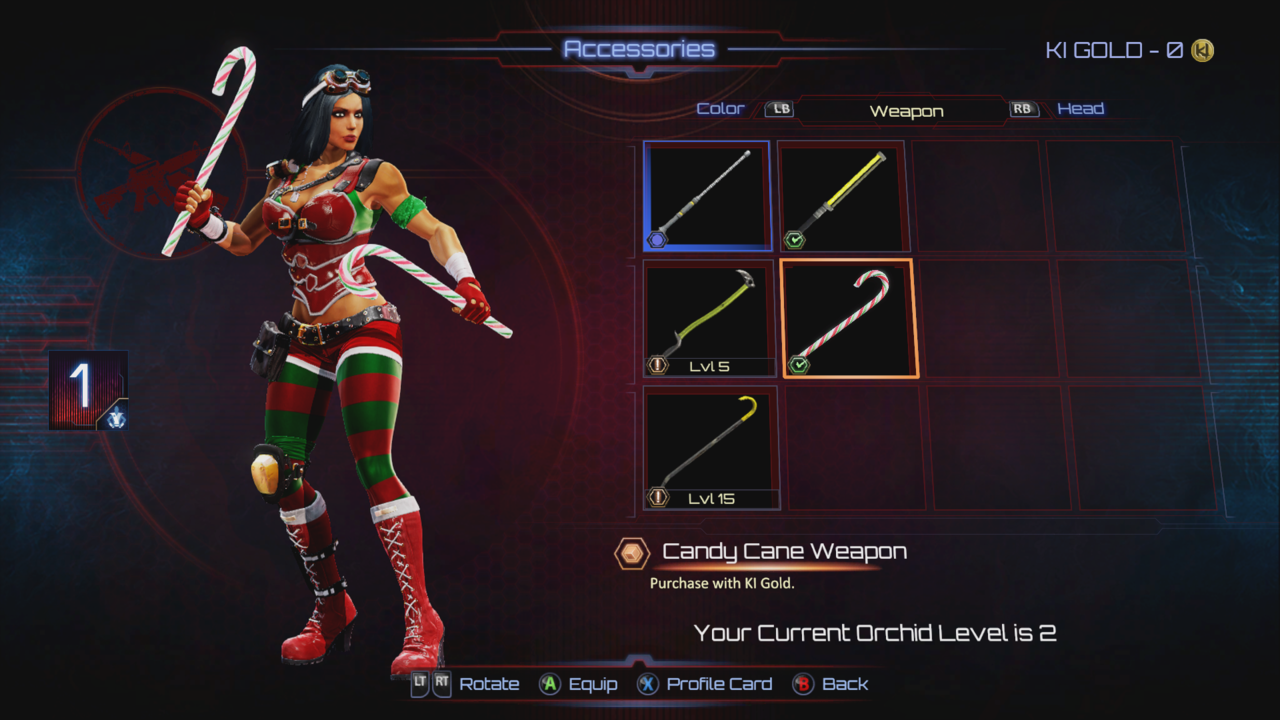
Until the update is applied, you can accessorize your fighters with holiday-themed items like a Saberwulf reindeer head, TJ Combo Santa head, and Orchid’s candy cane batons. You’ll get the items for free if you already bought Orchid, and Season 1 and 2 Ultra Edition. If you haven’t, you can also buy them individually. The items will not be for sale after update 2.2.
Killer Instinct shipped on the same day as the Xbox One launch, with Jago available to play for free. Players could unlock other characters and items by paying a fee.
Killer Instinct developer Double Helix was acquired by Amazon earlier this year, casting doubt on continued support for the Xbox One fighter. Microsoft claimed the game would not be affected and said that the franchise, which it owns, would continue on.






![Watch the First Street Fighter V Match Live Here [UPDATE]](https://playerschoicegames.com/wp-content/uploads/2014/12/2758428-01.jpg)