A scheduled server switch-off for the PlayStation 4 and Xbox One editions of NBA 2K14 has wiped players’ save files because they required online synchronisation.
Despite publisher 2K Games previously assuring fans that save files would survive the transition, players began to notice in early April that their career mode data was no longer accessible.
2K Games did not warn players that their save files would be deleted, and has only confirmed the issue via responses to emails.
One such message, obtained by Polygon, explains that those who still play the basketball sim will need to restart their career mode if they wish to continue playing.
A 2K Support representative wrote: “This means that if you had created a MyCareer or a MyGM online save file that was once connected to our servers it too sadly has retired and is no longer available for use and it would be necessary to re-create these files as offline saves.”
Players who have poured hours of time into the game have expressed their disappointment at the decision.
On Twitter, one player exclaimed: “Was 1/3 into my tenth and final season of NBA 2K14 career mode and you shut down the servers for good? Thanks a lot, 2K, I’m done with you!”
Was 1/3 into my tenth and final season of #NBA2K14 career mode and you shut down the servers for good? Thanks a lot, @2K, I’m done with you!
Freelance games journalist Chris Scullion suggested on his blog that a bond of trust has been broken. He wrote: “Just like that, 2K Sports has ended my 73-hour single player career by killing its online servers.”
GameSpot has contacted 2K to discuss whether the game’s successor, NBA 2K15, will also implement the same save file deletion should its servers ever be switched off.
The support message continues: “Sadly this may come as an inconvenience to some of you and if so we truly do understand and can feel for how upsetting this may seem as there always is a special bond that occurs between a player and their MyCareer save but all good things must come to an end and rest assured your MyCareer or MyGM went out while on top!”
Two separate games from Tokyo studio From Software now feature in the UK all-format games chart, according to official data.
While the PlayStation 4 exclusive Bloodborne drops one place to third during its second week since release, its predecessor also joins it in the top ten. Dark Souls II: Scholar of the First Sin–a remaster of the acclaimed 2014 title for Xbox One and PS4–enters the chart at eighth. It marks the first time two titles developed by the studio have featured in the same chart bracket simultaneously.
EA’s police-themed FPS Battlefield Hardline, meanwhile, retains its position in first for the third week running. The console version of Grand Theft Auto V, ahead of its release on PC, climbs to second.
Easter sales promotions help Far Cry 4 climb three places to fifth, while Dying Light maintains its successful run, holding in at ninth.
Two new releases made the top 40. Sims 4 expansion Get to Work enters at 18, while Xenoblade Chronicles 3D, which can only be played on the New Nintendo 3DS, comes in at 27.
The results are pretty neat and help highlight some of the key differences between Brawl and the Wii U and Nintendo 3DS releases. The Wii U footage looks much clearer because of the bump to high-definition visuals. Lucas is also a bit faster in the new version, which matches the general increase in the speed of play in the latest Smash Bros. release.
Lucas will be the second DLC character for Smash Bros. for Wii U and 3DS. The first downloadable fighter, Mewtwo, will be available on April 28. Players who purchased Smash Bros. on both systems and registered their copies with Club Nintendo before March 31 will receive download codes for Mewtwo for free. Everyone else can purchase the character on one system for $3.99 or both for $4.99.
Masahiro Sakurai, the series’ director, previously stated that there would be no more paid DLC. As such it’s not clear whether players will need to pay for Lucas as some will with Mewtwo.
Matthew Haag, better known in the gaming world as top Call of Duty competitive player “Nadeshot,” is stepping away from the game and taking on more of a backseat role at his squad, Optic Gaming.
“Basically, I am going to be taking a break from competitive Call of Duty. A leave of absence, if you will,” he explains in the video posted above.
He stresses, however, that he’s not retiring from competitive Call of Duty entirely. Haag will still play events here and there, and hopes to get back in the mix for this year’s new Call of Duty game from Treyarch.
But in the short-term, he says he hopes to “pursue other things that I’m passionate about,” including spending more time creating YouTube videos for games like Minecraft and H1Z1.
“I’m very confident that I will be revisiting my competitive roots and continue to compete in the next Call of Duty title and maybe towards the end of Advanced Warfare,” Haag said. “I just need some time to step back and pursue other things that I’m passionate about.”
Haag explained that, even though Optic had won three out of the last five tournaments it competed in, he felt he was “holding my team back.” Since Haag is a co-owner of Optic, his decision to step down as a regular player on the main squad was something of a managerial move.
Going forward, Optic will seek out another, potentially more skilled and driven player, for Haag’s replacement. “My passion just wasn’t high enough to continue to compete at this level,” he said.
Optic has not announced Haag’s replacement yet.
“If you guys asked me two months ago if I was going to be making a video like this, I would have told you you were absolutely crazy,” Haag said. “But things change, people change, situations change.”
Haag was named Optic’s captain last year, and at the Video Game Awards in December, was named the eSports player of the year. According to a 2014 New York Times story about him, Haag earns about $1 million per year through winnings and endorsements.
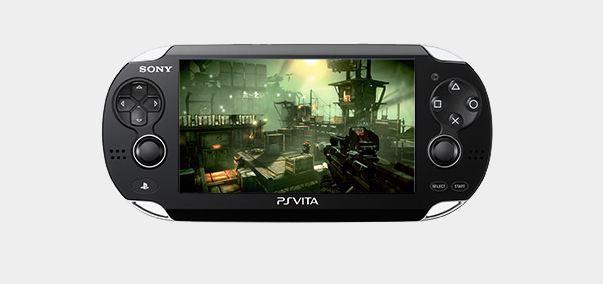
In November 2014, Sony agreed to a settlement over false advertising claims brought forth by the Federal Trade Commission related to the technical abilities of the PlayStation Vita. Now, the settlement offers–including free games, cash, and credit–are available to claim through this form [PDF].
If you bought a PS Vita before June 1, 2012 and live in the United States, you’ll be eligible to receive the following:
$25 cash (in the form of a check)
$25 PlayStation Store credit
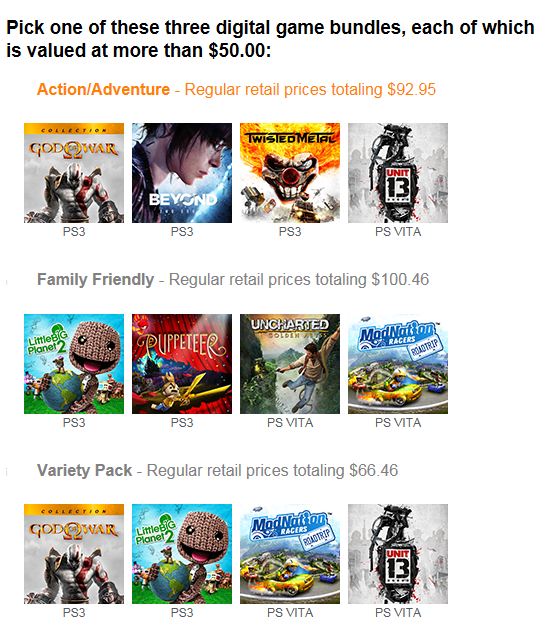
One of three game bundles ranging in value from $66.46 to $100.46 (see below)
According to the FTC’s complaint, Sony claimed the Vita would “revolutionize gaming mobility” by allowing users to enjoy PlayStation 3 titles using Remote Play and take advantage of cross-platform play and cross-saves. But the FTC concluded that these assertions were misleading. See the full story here.
It’s also important to note that, even though Sony has agreed to this settlement, the company “neither admits nor denies liability in connection with this matter.” What’s more, by accepting any of the offers, you are waiving your right to a future settlement. Full terms of the settlement offer are available here.
In addition to this PS Vita settlement case, Sony is now compensating PlayStation players for the infamous 2011 PlayStation Network hack. More details about that case and how to claim compensation are available here.
In case you’re worried about getting a refurbished console, Nintendo’s website says that authentic Nintendo Refurbished Systems carry a standard 12-month warranty, which is one of the longest standard warranties in the video game industry.
Square Enix will reveal a new game from one of its Western studios tomorrow, the company has announced.
The publisher teased the news via its official Twitter account, which invited fans to join Square Enix on Twitch for “a unique 3-day interactive experience from one of our Western studios.” The only other information it teased is the image you can see above, and that the game is currently being called “Project CKP.”
Some games published by Square Enix that are being developed outside of Japan include a new Hitman from IO Interactive and a new Deus Ex from Eidos Montreal, though Project CKP could also easily be a completely new franchise from a developer we haven’t heard about yet.
What do you think Square Enix is teasing here? Let us know in the comments below.
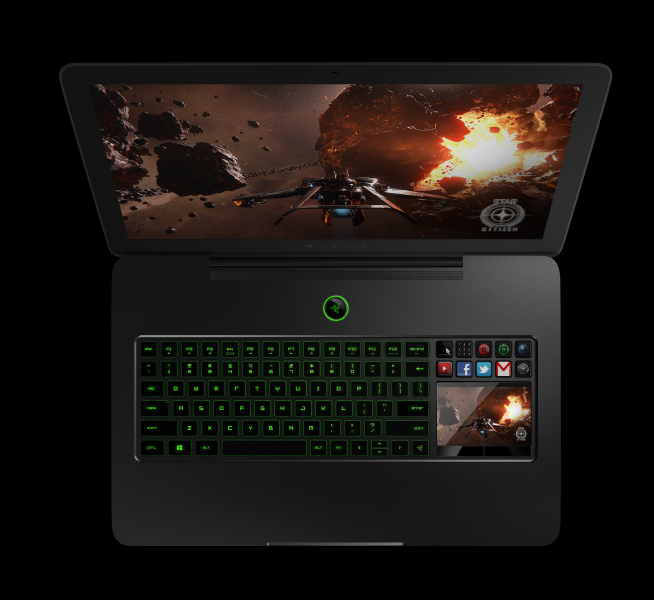
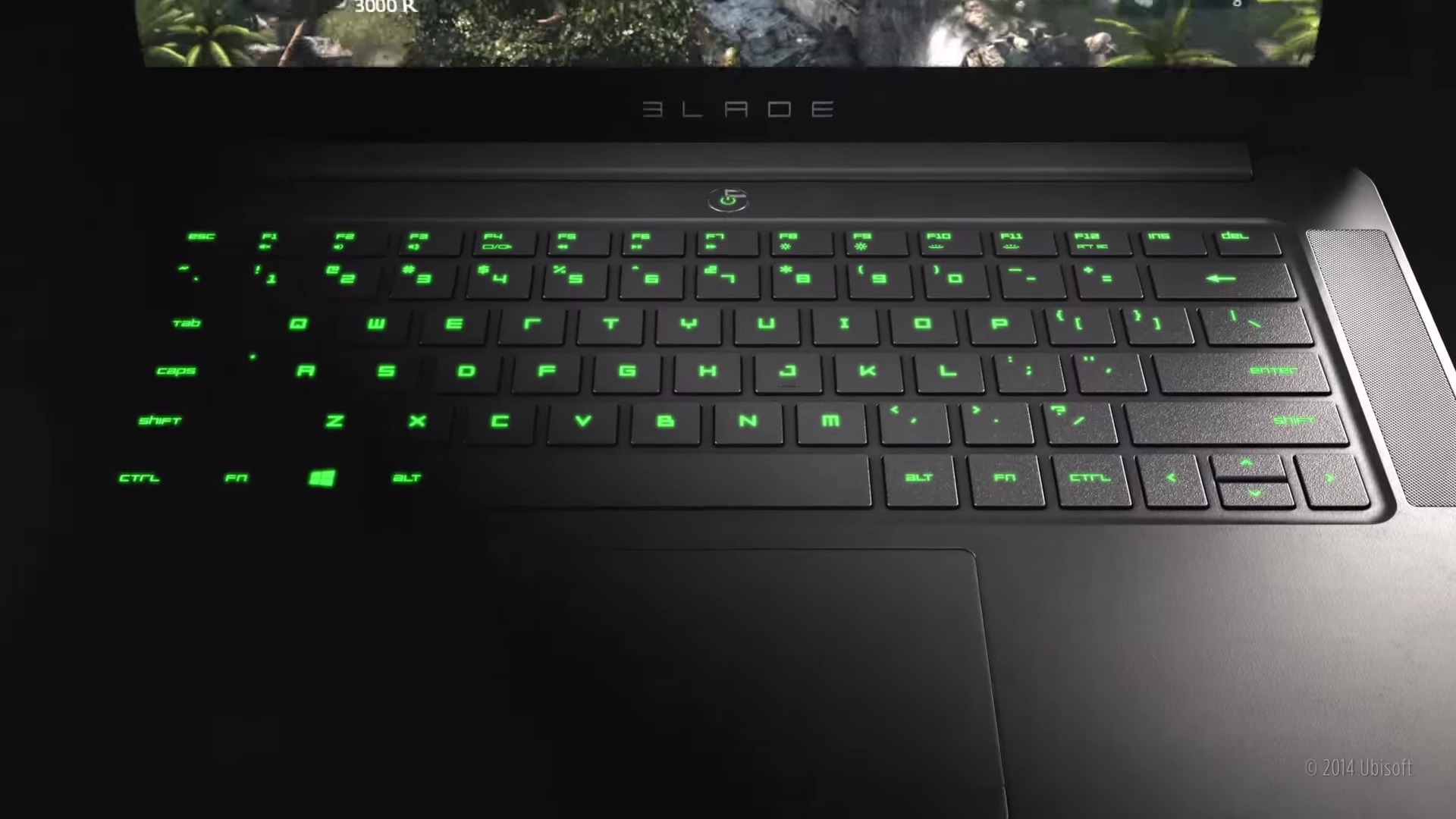
When it comes to gaming laptops, Razer’s ultra-thin Blade systems are in a league of their own. No, they aren’t the most powerful machines on the market, but they are the thinnest. Portability is valuable, but it would be meaningless if it came at the cost of performance. This isn’t the case with the Blade, which tears through games with Nvidia’s second best mobile GPU and a decent Core i7 CPU from Intel. Neatly organizing that much hardware into such a sleek chassis, without damning it to overheat, is a commendable feat, and while other manufacturers have come very close to matching Razer’s handiwork, it’s still the leader of the pack. Unsurprisingly, Razer’s back with new Blades for 2015, and today we’re looking at the thinnest of the bunch: the 14″ Full-HD model.
Razer has created a gaming laptop that closely resembles Apple’s MacBooks, albeit with a modest amount of flare; the Razer logo on the lid and the keyboard’s optional green backlighting are the only tells that it’s a gaming product. The black anodized aluminum chassis feels a lot better than the plastics used in most laptops, giving it an appreciable air of class. Of course, looks only get you so far; it’s what’s under the hood that matters most.
Spec Comparisons
Laptop
New 14″ 1080p Blade
New 14″ QHD+ Blade
New 17″ Blade Pro
14″ Blade (2014)
17″ Blade Pro (2014)
Price
$1999.99
$2,399.99
$2,299.99
$1,999.99
$2,099.99
Display
1080p, 14″
3200×1800, 14″
1080p, 14″
3200×1800, 14″
1080p, 17.3″
CPU
Intel Core i7 4720HQ
2.6GHZ / 3.6 GHz
Intel Core i7 4720HQ
2.6GHZ / 3.6GHz
Intel Core i7 4720HQ
2.6GHz / 3.6GHz
Intel Core i7 4702HQ
2.2GHz / 3.2GHz
Intel Core i7 4700HQ
2.4GHz / 3.4GHz
GPU
NVIDIA GeForce GTX 970M / 3GB
NVIDIA GeForce GTX 970M / 3GB
NVIDIA GeForce GTX 960M /4GB
NVIDIA GeForce GTX 870M / 3GB
NVIDIA GEFORCE GTX 860M / 2GB
RAM
8GB DDR3L
16GB DDR3L
16GB DDR3L
8GB DDR3L
16GB DDR3L
Storage
256GB SSD
256GB SSD
128GB SSD + 500GB HDD
256GB SSD
256GB SSD
17.3″ Razer Blade Pro
The latest 14″ 1080p Blade costs $2,000, and comes with an Nvidia GTX 970M GPU (3GB of VRAM), a quad-core Intel Core i7 4720-HQ CPU (2.6GHz base/3.6GHz turbo), 8GB of RAM (DDR3L-1600MHz), and a 256GB SSD (SATA M.2). For $2,400, you can get the 256GB QHD+ Touch model, which features a hi-res, 3200×1800 touchscreen, 16GB of RAM, and the same GPU and CPU configuration found in the 1080p model.
That leaves the Blade Pro model. Shipping in April, this large, 17-inch version of the Blade has a 1080p screen, but also a unique touchpad with a full color display next to the keyboard that can be used independently from Windows to browse the web or watch YouTube. Interestingly, the Pro comes with a weaker CPU and GPU than the standard Blade. Depending on which Pro Model you’re looking at, expect to spend between $2,300 (128GB SSD + 500GB HDD) and $2,800 (512GB SSD + 1TB HDD).
Benchmarks
While it’s not the pinnacle of portable gaming tech, the standard 14″ Blade packs enough power to run modern PC games at respectable framerates using max or near max settings.
The new 14″ Blade holds up very well under real world conditions, but a fair warning for those investing in a long term gaming solution: you can’t replace or add to the Blade’s RAM configuration. To be fair, 8GB is a good amount for now, but not being able to install RAM may prove to be a thorn in the side of some people down the road. Other manufacturers make it easy to swap RAM in and out of a laptop, but in order to keep the Blade thin, presumably, Razer had to solder its memory chips directly to its proprietary motherboard. It’s a given that the GPU and CPU aren’t upgradable, so keep these things in mind when investing in a gaming laptop, especially one with 3GB of VRAM. This detail will likely be the first weak-link in the chain as developers continue to push visuals and thus hardware requirements.
With only three USB 3.0 ports, HDMI out, and a combo headphone/microphone port, the Blade’s connectivity options may leave some users wanting. While it’s understandable why Razer might opt to avoid the likes of a SD Card slot or an Ethernet port in the name of thinness, it’s questionable which is more valuable: portability or utility. The lack of an ethernet port is the biggest issue we faced, as it made downloading large games a longer process than we’d like. While it’s got a good WiFi radio, with support for 802.11a/b/g/n/ac+, we eventually reached for an ethernet to USB adapter. This obviously sped things up. For a system designed around downloadable games, it makes you wonder: why doesn’t Razer include an Ethernet adapter?
Like the Apple products it resembles, the Blade is fitted with a chiclet style keyboard. The flat, spaced out keys are great for typing, and surprisingly good for gaming as well. Unfortunately, the same can’t be said for the mouse buttons beneath the touchpad. The touchpad itself is smooth and responsive, but the buttons feel flimsy. The subtle physical feedback you feel when pressing a button is important because it signifies that the input has gone through, and when the timing of the feedback feels off or hollow, you notice. There is so much right about the Blade’s design, but if there’s one aspect that needs another pass, it’s the mouse buttons. They aren’t horrible, but there’s definite room for improvement.
For such a thin laptop, the Blade’s battery lasts a decent amount of time while it’s untethered from an external power source. We kept the Blade alive for nearly four hours while gaming, and if you’re keen to use it for non-gaming activities with a slightly dimmed screen, expect that count to rise as the CPU’s less taxing HD Graphics 4600 GPU takes over. The good news is that the Blade’s power supply is only slightly thicker than a large candy bar, so it won’t weigh you down if you need to carry it on the go.
With a 256GB SSD, the Blade can move move data quickly, but it doesn’t necessarily hold a lot of data. A 512GB drive would at least alleviate some of the space constraints that occur when installing multiple games, but unfortunately, Razer doesn’t offer the option on the 1080p model.
The new 14″ Blade is a capable, portable, and great looking gaming laptop, but more than ever, the it’s facing competition from outsiders. Gigabyte’s P34WV3-CF2 has the same CPU,GPU, and RAM configuration, and although it’s .13 inches thicker, Gigabyte’s gaming laptop weighs over half a pound less than the Blade. It’s also worth noting that it has four USB 3.0 ports, an ethernet port, and an SD card reader. You also get more storage for your money with the included 128GB SSD and a 1TB 5400 RPM HD. With all of these additions, and easily upgradable components, why is Gigabyte’s laptop $400 cheaper? It’s equally powerful, more useful, and cheaper, but it doesn’t have the same build-quality that’s present in the blade. In short, for the Blade, you’re paying for not just for it’s hardware, but also for the craftsmanship behind the product.
If you pick up a Blade with all of its limitations in mind, you won’t be disappointed. While it could benefit from a few more connectivity options and the ability to upgrade components, it’s an incredibly well built gaming laptop that’s thin and powerful. It’s not the cheapest option around, but it’s not always about comparing specs and numbers if you take build-quality seriously. Here, the Blade is the slickest gaming laptop money can buy.
Capcom is looking for players to test an upcoming Ghostbusters game in development for the iPhone, according to a post to the Capcom Unity Blog.
“Beeline is looking for a few folks to participate in a beta test for an upcoming Ghostbusters iPhone game,” Capcom said. “If you’re interested please complete the following survey.”
The survey asks for your basic information (gender, age, education, employment status), and some of your mobile gaming habits.
It asks what mobile games you play, citing specific examples like Puzzle & Dragon, Heroes of Dragon Age, Avengers Alliance, Clash of Clans, The Simpsons: Tapped Out, and Marvel Puzzle Quest, or invites you to write in your own answer. It also wants to know many times a day you play, and how long is your average play session, with the longest option being 10 minutes or more.
The upcoming title is being developed by Beeline, which already has one free-to-play, tower defense Ghostbusters game in the iTunes App Store.
If you complete the survey you’ll be asked for your email for a chance to participate in the beta test.
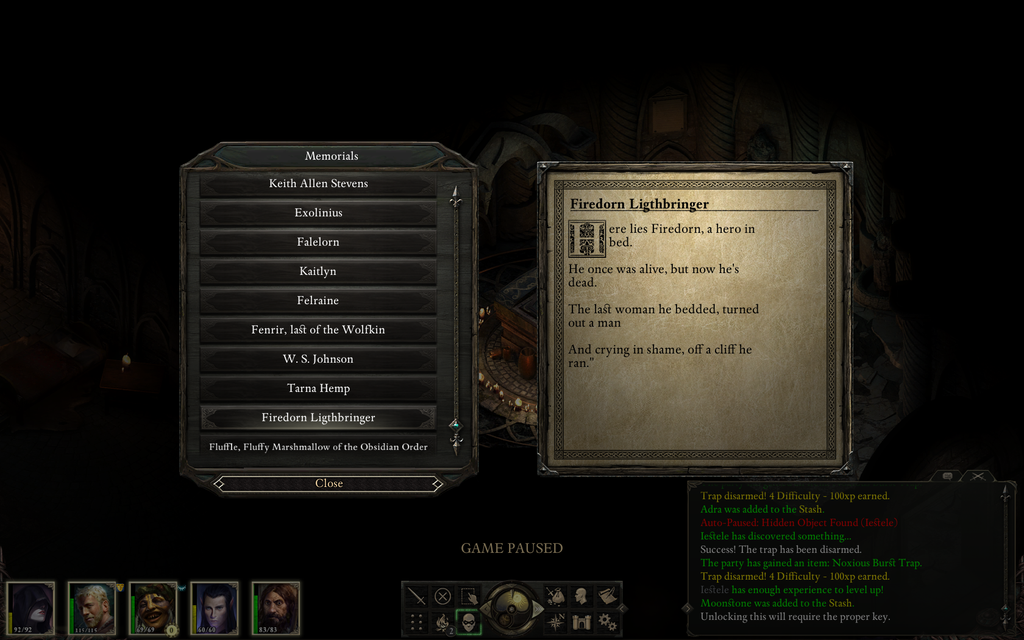
Obsidian has removed an offensive limerick from its recently released role-playing game Pillars of Eternity that was written by one of the game’s Kickstarter backers, the developer has announced.
“It’s come to our attention that a piece of backer-created content has made it into Pillars of Eternity that was not vetted,” Obsidian CEO Feargus Urquhart said in a post to the game’s forum. “Once it was brought to our attention, it followed the same vetting process as all of our other content. Prior to release, we worked with many of our backers to iterate on content they asked to be put into the game that didn’t strike the right tone.”
Urquhart said that Obsidian asked the backer before changing it, and that he gave them new content to replace the offensive limerick. You can see the content in question that some players thought was transmisogynistic as it originally appeared in the game in the image above.
The change was made alongside patch 1.03, which also fixed a serious bug that centers around equipping items. You can find the full patch notes here.
Pillars of Eternity was released late last month, the product of a successful 2012 crowdfunding campaign that raised $4 million.