Category: Gamespot

  • Hyrule Warriors' Final DLC Includes an Unexpected Playable Character

    Hyrule Warriors' Final DLC Includes an Unexpected Playable Character

    This story contains spoilers about a secret character in the Boss Pack DLC for Hyrule Warriors.

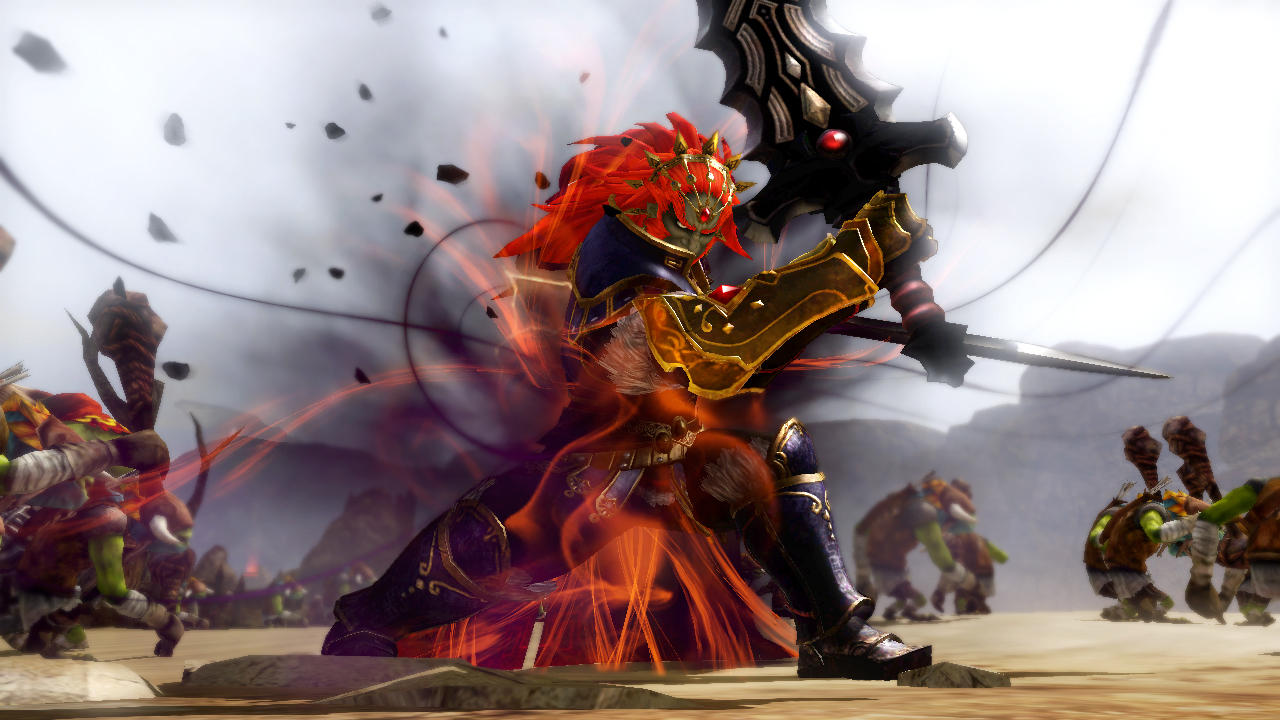
    The fourth and final DLC pack for Hyrule Warriors is almost here. In addition to adding Ganon as a playable character, there’s another secret, unlockable character awaiting players.

    With the DLC having been released in Japan this week, a YouTube video (below) has surfaced showing that the Boss Pack DLC includes a playable Cucco. That is, a giant version of the chickens from almost every Legend of Zelda game ever released is now playable, and it can not only use its beak to attack, it can also summon smaller Cuccos to attack.

    Unlocking the Cucco requires you to achieve an A-rank of Ganon’s third survival mission.

    The Boss Pack is due out in North America on March 12 for $2.99. Alternatively, it’s included in the previously released $20 bundle of all four DLC packs.

    Powered by WPeMatico

  • House of Cards Season 3 Keeps the Video Game References Coming

    House of Cards protagonist Frank Underwood is a fan of video games, and his hobby doesn’t take a backseat in the recently premiered third season.

    Earlier in the series, Underwood–played by Kevin Spacey–expresses his delight in seeing a PlayStation Vita in a moment that felt a lot like paid product placement. Later, he’s seen playing Call of Duty against other people. online (After Spacey starred in Advanced Warfare, there was some talk of having him play it on the show.)

    Now, in the third season, he’s spending time on an iPad playing the critically acclaimed Monument Valley. And lest you think the appearance was paid for, developer Ustwo has denied that is the case, stating on Twitter, “People have been asking, so we can confirm that MV appearing on House of Cards wasn’t paid product placement, just a cool collaboration.”

    That isn’t the extent of the video game talk in season three. As Polygon reports, a video game reviewer–the fictional Thomas Yates–is hired to write Underwood’s biography during the course of the show, and the subject of his reviews come up.

    Underwood notes that he “tend[s] to play shoot ’em ups” while shying away from indie games. However, Yates’ review of Monument Valley prompts Underwood to give it a try, which is why we see him playing it–and it’s why he wants Yates (whom he deems a good writer) to pen his biography. Underwood is also later exposed to The Stanley Parable, another game that doesn’t fit in the shooter category.

    Season three of House of Cards is available for streaming now through Netflix.

    Powered by WPeMatico

  • "Throne War Simulator" Crowfall Raises $800,000 in 3 Days

    "Throne War Simulator" Crowfall Raises $800,000 in 3 Days

    Crowfall, a new massively multiplayer online game from developers who worked on Ultima Online, Star Wars Galaxies, Wizard 101, and Star Wars: The Old Republic, has hit its Kickstarter funding goal of $800,000 in just three days, developer ArtCraft has announced.

    ArtCraft describes Crowfall as an MMO throne war simulator, in which players take on the role of kings, queens, mercenaries, and assassins in a feudal world. Players will also battle for territory by building castles and siege equipment.

    ArtCraft told GameSpot that Crowfall’s central conceit is that players will have persistent characters that embark on finite campaigns they can actually win. Once you win or lose, you can move on to a new campaign.

    At the time of writing Crowfall has $882,779 from 8,942 backers and 25 more days to go until the end of the crowdfunding campaign.

    “We are floored and humbled by the response from our community,” ArtCraft president and executive producer Gordon Walton said. “We hoped that the vision behind Crowfall would help it find an audience, but we didn’t expect to exceed our target so quickly.”

    For more on Crowfall, read GameSpot’s in-depth interview with Walton and creative director J. Todd Coleman.

    Powered by WPeMatico

  • Riot's Marc Merrill Discusses SpectateFaker and Improving Community Relations

    Riot's Marc Merrill Discusses SpectateFaker and Improving Community Relations

    Earlier today, Riot Games President Marc Merrill issued a formal statement regarding his company’s investigations into the “SpectateFaker” Twitch stream, the Azubu DMCA takedown notice that was issued against it, and Merrill’s controversial comments on Reddit and Twitter last weekend.

    This morning, I sat down with Merrill to discuss that statement, his interactions with the community, and what this means for Riot going forward.

    Riot’s statement frequently references Sanghyuk “Faker” Lee’s personal desire to have the stream removed as a major motivating factor in their decision to issue the DMCA notice. With the only public comment on the issue coming from his team, SK Telecom, I ask Merrill if Riot had spoken to Faker. I also ask if it was necessary for Lee to personally want the stream taken down or if the organization representing him could request the removal on its own.

    “I think that Faker, like any amazing pro athlete around the world, is in clearly high demand,” he replies, “and our understanding is that he has a really good relationship with SKT. Otherwise, when he was getting crazy offers to go play for different teams around the world, the assumption would be that he would have taken something like that. That being said, I’m personally not super close to the details in terms of how his relationship works.”

    Speaking further, Merrill likens the scenario to traditional sports, where players don’t have the time or interest to navigate all of the business dealings around their career and end up relying on agents or sports clubs to handle such issues for them. He believes that “it would be a situation like the [Patriots] speaking on behalf of Tom Brady.”

    “…our mutual understanding of this stuff will continue to evolve and become more clear over time as well.”

    Is SKT setting a precedent? Would the handling of any future requests for a stream takedown of a professional player’s gameplay shift to the team organizations, whether it be in North America, Korea, or elsewhere?

    “It’s a case-by-case basis. I think we’re covering new ground here and need to evaluate the types of things that are going to happen and unfold going forward. In the same way that when we originally launched League of Legends we didn’t have the Summoner’s Code, we expect these types of things to evolve over time as we learn and get more exposure to what types of divisions we’re going to encounter.”

    Regarding guidelines, much of the public discourse around the SpectateFaker stream involved where the line was drawn. Could someone “unlock” the camera from Faker, create a “SpectateFakersOpponents” stream, or even more broadly, could they create a stream that spectated a team of players instead of an individual? How will Riot determine when “harm” is being done, as referenced in their statement?

    Merrill admits that it’s hard to figure out where the line is; “We think that the SpectateFaker case is above the line whereas SaltyTeemo is below the line. So that gap is the type of situation that I think is where we’re all going to have to work together to figure it out. So we expect that our mutual understanding of this stuff will continue to evolve and become more clear over time as well.”

    He does promise that for anything “precedent setting,” Riot will be transparent with the community and open a line of communication.

    But for content creators and fans, this still leaves a lot of questions open. Hypothetically, if I want to create an automated Twitch stream that follows different members of Counter Logic Gaming across their matches, how do I know if I would be at risk for receiving a DMCA takedown notice from Riot after launching it?

    “One of the things that I think would be great is if people who are working with the API and trying to build great systems on it, reach out to our dev relations team and talk to us. If they say, ‘Here’s what I’m trying to do, what do you guys think?’ I think as we all figure these things out together, it’s about dialogue and getting on the same page about the goal: Let’s make sure we don’t harm the community in any macro sense or a micro sense for an individual.”

    Riot hopes that by explaining its intent in today’s statement, it’s helped players and members of the community understand what the general boundaries are. Merrill adds, “If there’s a gray area, we can collaborate to figure out what makes sense and what doesn’t.”

    With its statement, Riot has formally acknowledged that Azubu had no valid right to issue the initial DMCA takedown notice. But did it take Riot over two weeks to publicly address its partner’s overreach?

    “Our goal is to nurture this positive and engaging global community”

    Merrill explains that Riot “needed to look into it and double-check our facts.” Now that they have, he feels comfortable clarifying its position, which is, “If there are going to be any takedowns, they will be from us.”

    Our conversation then turns to the individual that started it all: StarlordLucian, the SpectateFaker stream administrator. I’m curious if Merrill or Riot have reached out to him directly yet. “Our only communication currently has been through Twitter and/or Reddit. I would love to in the future, but we haven’t done that yet.”

    Finally, we arrive at a more personal subject: Merrill’s controversial and emotional comments the weekend before. Riot is no stranger to events unfolding in an unpredictable way that leads passionate fans to intense discussion. Why did this moment in particular spark such an immediate and unrestrained reaction?

    Merrill describes his initial reaction upon becoming aware of the situation: “My mind instantly went to ‘Oh my God! Precedent!’ and we’re theoretically entering this new gray area where a bunch of bad situations might manifest. The worst case scenario for me would be that Riot wouldn’t stake the type of position where we can protect players in the way that we always care about doing. Our goal is to nurture this positive and engaging global community through esports and all those different dimensions. Everything that we’ve done has always been consistent with that, we think. And if there’s ever something that isn’t right, then we quickly adjust course, apologize, and try to evolve. We’re going to continue doing that going forward.”

    The emotional reaction, Merrill attributes, to a personal sense of desire to help the disenfranchised. He recounts several life events where he was angered or frustrated by an individual or a group being mistreated. “That’s why I was emotional in the reactions and what I clearly screwed up was, I muddied the message because of the emotion. I was meant to just talk about the case and the principles, but then I ended up doing some things which came across as attacking an individual which was definitely not my intention at all.”

    Merrill explains that while he was very active in the community in the early days of Riot, that involvement has dropped off as the company has scaled. He hopes that both he and CEO Brandon “Ryze” Beck can work to improve their personal relationship with the community so that players have better context and understanding when they make personal statements. “At the end of the day, the reason Riot is the way it is from a lot of dimensions is because we don’t see ourselves as above the community, we see ourselves as a part of it. Sometimes we forget that we could be perceived as these dudes that have this powerful voice, because we don’t see ourselves that way.”

    He explains that he never wanted players thinking his comments were an official statement from Riot. “What I was trying to do was say that we’re going to look into this and come out with something. I’m concerned.”

    Ultimately, Merrill does not feel discouraged by the harsh feedback from the community, “A lot of the comments are really well-deserved. I botched a lot of the intent through bad, reactive messaging, so I don’t blame the community for anything. We’ve been in their shoes many times and been pissed at online game companies that are doing things that we perceive to not make sense. The comments sting, of course, but I think it’s the case where it motivates us to get more involved. If there was more of a relationship there, like there has been in years past, this type of stuff would be easier to reconcile.”

    Powered by WPeMatico

  • FF14 Welcomes Back Old Players With Free Time as it Hits 4 Million Accounts

    FF14 Welcomes Back Old Players With Free Time as it Hits 4 Million Accounts

    Final Fantasy XIV has reached a new player milestone, and to celebrate, it’s offering former players the opportunity to play for free for a limited time.

    Square Enix has announced XIV account registrations have surpassed the four-million mark. Mind you, that’s the number of total registrations the game has seen, and not the number of active subscribers. Like any other subscription-based MMORPG, that pales in comparison to World of Warcraft, which had 10 million subscribers as of November (which had dipped to 6.8 million before the launch of Warlords of Draenor). However, considering that XIV was described by Square Enix’s CEO as having “greatly damaged” the Final Fantasy brand before it was relaunched as A Realm Reborn, it’s positive news.

    Hoping to reel former subscribers back in, Square Enix is offering free play time from today, February 27, until March 9 at 1 AM PDT. In order to qualify for this promotion, you need to have previously purchased and registered XIV, and your account needs to be inactive during this promotion (meaning current subscribers won’t have their subscriptions extended). You can check your account’s status on Square Enix’s website. The offer is available on all platforms: PC, PS4, and PS3.

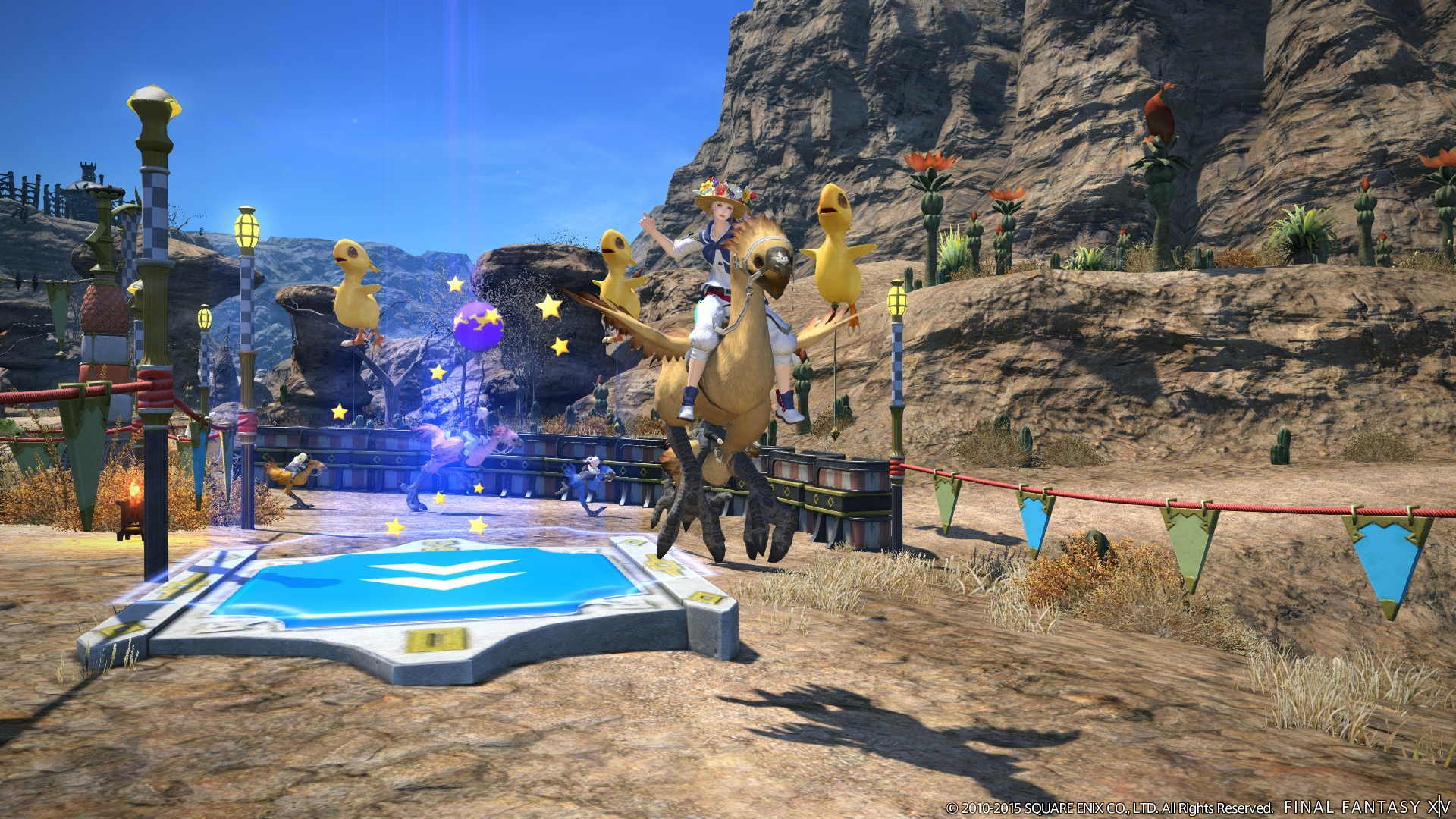
    Even if you’ve only been away from the game for a short time, there’s likely new content for you to check out. Just recently, the Manderville Gold Saucer was added, introducing new mini-games and new activities like chocobo racing.

    If you’ve never played before–or don’t mind making a new account–Square Enix always offers a 14-day free trial for the game, albeit one that imposes certain limitations, such as being unable to advance past level 20.

    Powered by WPeMatico

  • Five Nights at Freddy's Doesn't Scare These Old People

    Five Nights at Freddy’s is generally accepted as being a scary game. Both it and its sequel have no shortage of jump scares, if nothing else, and part of its popularity stems from the fact that many people enjoy watching others play them and jump out of their seats. As it turns out, apparently age brings with it a resistance to being scared.

    YouTube channel TheFineBros has put together a new video that demonstrates this. Rather than being a 10-minute video of senior citizens being almost frightened to death by Five Nights at Freddy’s, it’s instead a collection of elderly individuals collectively scoffing at most everything the game throws their way. Even when a few of them do get scared, it tends to be immediately followed by a laugh.

    This is all weirdly hilarious, particularly thanks to a gentleman by the name of Hanoch who alternates between being confused and simply not caring about the threat of being stuffed into an animatronic suit. His reaction at the 3:56 mark is particularly priceless to me.

    Below you’ll find video of these same people playing through Five Nights at Freddy’s 2. Both games were released last year on PC, iOS, and Android, with a third game coming sometime this year.

    Powered by WPeMatico

  • Controversial SpectateFaker Twitch Stream Gets Riot President Comment

    Following a takedown notice under the Digital Millennium Copyright Act against the Twitch stream “SpectateFaker” by rival streaming service Azubu, Riot Games president Marc Merrill has issued a statement clarifying the company’s position on the issue. In the statement, Merrill also addressed initial comments he made on Twitter and Reddit last weekend regarding the controversy that that he describes as: “Several mistakes which hurt our efforts to clarify things.”

    While the statement admits that Azubu’s initial DMCA claim was not valid, Riot Games plans on issuing their own DMCA takedown against the stream and similar streams in the future.

    We believe the in-game spectator experience for ranked games is a critical part of the LoL gameplay experience, and we have no interest in seeing it crippled.

    GameSpot spoke in person with Merrill earlier this morning regarding the statement that will be going up shortly.

    In the meantime, here’s his interaction with the community around the topic, and what this means for Riot going forward.

    Merrill’s full statement is available below:

    Marc Merrill: Over the last week, we’ve been wrestling with some complex and layered issues around how players create and share gameplay content online, as brought up by the SpectateFaker streaming case. It’s come with a lot of learnings, some unclear communication on our part and a lot of debate, both within Riot and externally, on the best way to balance access to gameplay footage that players want to see with protection for individual players who do not consent to having a third party stream all of their games.

    Here’s the TL;DR: We believe the in-game spectator experience for ranked games is a critical part of the LoL gameplay experience, and we have no interest in seeing it crippled.

    Where things become problematic is when a spectator mode for a player (pro or otherwise) is consistently streamed against their wishes, and in a way that is harmful. Having looked into the SpectateFaker case we’ve established two major things: 1) That the DMCA issued by Azubu did not have a legal standing as we, not Azubu, own the gameplay content, and 2) that Faker believes (and we agree) that this stream is harmful to him and to his brand. We’ll be honoring Faker’s request and pursuing a takedown of the stream.

    Personally, it’s pretty clear that I should have handled communications around this better. My intent was to jump to the defense of a player (Faker) who was being singled out and streamed against his will. I’m very sensitive to the topic of bullying. It’s a sobering lesson to me that in discussing concerns about it, I may have came across as the bully myself.

    This individual case has brought up a lot of issues that go beyond Faker — or even beyond pro players. It has the power to affect all of us who create and spectate LoL gameplay through the client. We feel the weight of that responsibility, which is why we took some time to really debate this and double-check our assumptions before coming back with a thought-out response.

    I wanted to take some time to talk a little about our core philosophies around how we’ve approached this issue, what we got wrong in our first steps and what approach we’ll be taking moving forward.

    What happened?

    With such a complex set of variables and players, there’s no easy way to summarize the issues — but below is a topline account of what happened.

    Early last week, streaming platform Azubu sent a Digital Millennium Copyright Act (DMCA) takedown notice to a stream named SpectateFaker. This stream auto-checked for solo queue games of SK Telecom T1 player Lee “Faker” Sang-hyeok, and streamed them on Twitch using LoL’s spectator mode.

    Along with several other Korean esports pros, including SK Telecom teammates, Faker signed a contract in September 2014 to stream exclusively on the Azubu platform — and Azubu felt that the independent stream of Faker’s games over on Twitch challenged that exclusivity. As the SpectateFaker streamer StarLordLucian pointed out, however, according to the LoL terms of use, players sign away rights of ownership to the gameplay content they create within the game. Legally, Azubu doesn’t own the streaming content that Faker was producing. As many have pointed out — and as we’ve given feedback to Azubu directly — their DMCA action wasn’t based on a valid legal claim of ownership.

    Earlier in the week, SKT and KeSPA had reached out to Riot to express the fact that Faker did not wish his content to be rebroadcast in this way and hoped we would take action to have it shut down. SKT themselves issued a statement via their Facebook page confirming that Faker was uncomfortable about his name and gameplay being streamed without his consent, and that they believed it had a negative impact to the value and stability of his streaming offering.

    What’s our approach?

    Let’s dig a little further into our core philosophies and how we plan to tackle this complicated issue moving forward:

    …we believe that the stream was born out of positive intentions to provide esports content to fans worldwide…

    With any issue like this, our guiding philosophy is to protect the interests of players; in this case, things aren’t so simple. There are two distinct player interests that are in conflict: the interests of the individual player (in this case Faker) with the interests of the thousands of players who enjoyed watching the Twitch streams of him playing via SpectateFaker. When we looked at this case, we had to weigh these two interests and make a balanced decision as to what we thought offered the most harm — or the most benefit — to the groups involved.

    What StarLordLucian did with the SpectateFaker stream provided a service for thousands of players who were able to watch Faker solo queue games on the platform they prefer and using the tools they’re accustomed to. It was an innovative use of our API which identified a unique edge case, and we believe that the stream was born out of positive intentions to provide esports content to fans worldwide. I regret insinuations otherwise that I made on Reddit in the heat of the moment.

    My alarm was driven by the fact that Faker and SKT view this as harmful to his career and brand, and asked for our help in helping to shut down the stream. Having looked into this issue we understand why it would be viewed as harmful. Streaming contracts like this are an important cornerstone in creating a stable financial esports ecosystem in Korea. Systematically streaming spectator mode of each of Faker’s games (rather than a few sporadically) on a rival platform understandably lessens the value of his partnership with Azubu and even more importantly, the potential of pros to gain equally lucrative streaming partnerships in the future. In a very real and material sense, the SpectateFaker stream causes Faker harm in his own judgment — and we believe he should have the right to see it discontinued.

    …having your gameplay systematically streamed in a way that has the potential to harm or distress you isn’t just something you should put up with as a consequence of playing ranked games.

    This is a precedent that doesn’t just apply to pro players — or to monetary or brand loss. Imagine a scenario in which a bronze player was targeted by an unwanted stream that meant all of his ranked games were broadcast to a crowd who made fun of him and his gameplay — all against his will. “Harm” could come in several forms — emotional, material, or otherwise.

    We think that having your gameplay systematically streamed in a way that has the potential to harm or distress you isn’t just something you should put up with as a consequence of playing ranked games. Or imagine a stream targeting a female player, where a narrator or automated system harasses her and comments on every move she makes in every game she plays online. Riot has always taken our responsibility towards nurturing a sportsmanlike and positive community very seriously and we view this precedent-setting situation through a similar lens.

    There are examples of this kind of spectator mode streaming that don’t carry the same bite. To give just one, SaltyTeemo is a stream that often targets low elo players and streams their gameplay from spectator mode, but the intent here feels completely different. The stream removes usernames and doesn’t specifically target individual players over and over. This isn’t a calculated harassment of one specific player, it’s a compilation of gameplay that’s entertaining and non-malicious towards individuals.

    We will intervene and shut down streams where we perceive that it’s causing harm to individual players. This will usually result from the individual player requesting the takedown (although it isn’t always dependent on it), so we’ll also make it easy for streamers to contact us with those kind of requests and look into them on a case by case basis. Although the SpectateFaker case was the genesis – and will be the first case where this policy will apply — it isn’t specifically targeted to him, any pros or even pro players exclusively. If you believe you are being targeted for harassment by someone streaming your spectator games, please file a ticket with Riot player support.

    This doesn’t mean that there won’t be a technical/API fix in the future that helps us tackle these kind of problems at the root. Spectator mode is an evolving tool that should not only enable players to watch gameplay live, but also be sensitive to the concerns of players who feel targeted or harmed by others who systematically stream each of their games without their consent. The in-game spectator experience for ranked games is an important part of the LoL experience for those that enjoy watching and learning from other players – pro or otherwise. It’s the act of streaming that gameplay that becomes problematic when the player actively objects – and at the moment we’ll intervene to protect them. Any technical tweaks to our API have a longer timeframe than this response allows for, but we’re committed to assessing what we can do to improve choices for players and streamers.

    With regards to the SpectateFaker stream case, we believe strongly that the potential material harm caused to the player is real — as such, we’ll be honoring Faker’s request and pursuing a takedown of the stream.

    What did we learn from communications around this issue?

    Sorting through complicated and grey legal issues has become par for the course for Riot as we refine our processes in response to player need. Unfortunately, we sometimes show our inexperience when tackling a new area and there’s a lot to learn from this situation.

    When I jumped into the debate on Twitter and Reddit, my first concern was to clarify our position around protecting the player experience. My gut instinct was in full force, and I was quick to jump to what I considered to be the defense and protection of a player who was being mistreated. Unfortunately, in my efforts to explain my concern with the situation, I made several mistakes which hurt our efforts to clarify things.

    1. Although I disagreed with StarLordLucian’s actions, they were born out of good intent. By making things personal and adversarial, and accusing him of ‘estalking’ Faker, my comments didn’t appropriately reflect his original intentions, which was to showcase Faker on Twitch.
    2. I moved too quickly to comment in a situation where I didn’t have the full context. I made an error by originally assuming that StarLordLucian was rebroadcasting direct streams; in fact he was streaming spectated games in an automated fashion. Basic factual mistakes like this blurred the message I was hoping to get across – that our primary goal was to protect players who felt they were being harmed by being systematically streamed against their will.
    3. Players were calling for an overall comment on the issue and the legal precedent it created (like this one), rather than a laser focus on the isolated StreamFaker case. By focusing solely on this case, I obscured some of the bigger issues at stake that we are hopefully now clarifying.

    Untangling the threads around this kind of issue has been a learning experience for all of us – and it’s one that’s still ongoing within Riot and externally. We know that our decisions will spark a ton of debate. We think that in these instances when something has the power to set precedents in a new and emerging space, debate is not only healthy but necessary.

    I look forward to hearing your feedback and want to thank everyone who participated in the discussion. To be honest, a lot of the comments still sting — but we’ll learn from this experience and improve going forward.

    What do you think about the situation and Riot’s comments? Let us know in the comments below.

    Powered by WPeMatico
  • Gaming Deals: Get a PS4, a Free Game, and 6 Months of PlayStation Plus for $360

    Gaming Deals: Get a PS4, a Free Game, and 6 Months of PlayStation Plus for $360

    Ebay has the best new deal of the day, offering a PlayStation 4 with your choice of either Destiny, NBA 2K15, LittleBigPlanet3, or Far Cry 4, and six months of PlayStation Plus for just $360.

    Target also has a “buy one get one free” sale on Ubisoft games, including Assassin’s Creed Unity, Watch Dogs, and more.

    Below you’ll find the rest of today’s best deals divided by platform:

    PlayStation 4

    The PlayStation Store has a sale on Ubisoft games, including Watch Dogs for $25, The Crew for $42, and more.

    Sony has announced its Spring Fever event, which will offer special prices on PSN games every week starting March 3. You can find the full lineup of the PSN games included in Spring Fever here.

    Best Buy has a PlayStation 4 with a free copy of The Last of Us and a PlayStation TV for $400.

    Get a $50 PSN gift card from Ebay for $40.

    From now through to March 1, GameStop shoppers that trade in a PlayStation 3 (120 GB or greater) or an Xbox 360 (250 GB of greater) toward the purchase of a new PS4 will receive $125 in store credit. That means you can pick up a standard $400 PS4 for only $275.

    Other PS4 games deals:

    PlayStation Plus free games for February:

    PS4

    PS3

    PS Vita

    Xbox One

    Get a year of Xbox Live Gold for $40 from the Microsoft Store.

    Microsoft announced this week’s deals for Xbox One and Xbox 360 owners. Now through March 2, anyone with an Xbox Live Gold subscription can get Assassin’s Creed IV: Black Flag for $25, Sleeping Dogs Definitive Edition for $24, and The Crew Silver Credit Pack for $15. Find the full list this week’s deals for Xbox One and Xbox 360 owners here.

    Free Games with Gold for February:

    Xbox One

    Xbox 360

    Wii U

    PC

    Paying $15 for The Humble Square Enix Bundle 2 will get you eight games from the publisher, including Tomb Raider, Sleeping Dogs, and Deus Ex: Human Revolution.

    Theme Hospital is free on Origin.

    You can get 20 percent off at Green Man Gaming with the code: B1CYB0-CLSSD1-ARAAGM.

    Other PC games deals:

    PS Vita

    Sony is celebrating three years of the PS Vita with a sale on the PlayStation Store that includes Oddworld: Munch’s Oddysee HD for $7, Limbo for $5, and more.

    Hardware

    Amazon prices are accurate as of publishing, but can fluctuate occasionally throughout the day.

    GameSpot’s gaming deals posts always highlight the best deals we can find regardless of retailer. We also occasionally use retailer affiliate links, which means that purchasing goods through those links helps support all the great content (including the deals posts) you find for free here on the site. Got questions? Email news@gamespot.com or ask us in the comments!

    Powered by WPeMatico

  • DirectX 12 Can Combine Nvidia and AMD Cards

    DirectX 12 Can Combine Nvidia and AMD Cards

    Microsoft could be on the verge of a graphics card breakthrough with the arrival of DirectX 12, as the new API will allow PC users to combine GPUs from different manufacturers.

    Presently, PC users who want to double the number of graphics cards attached to their motherboard are restricted by the manufacturer. So, two Nvidia GeForce cards of the same type would work via SLI, and two AMD Radeon cards can unite via Crossfire, but these cannot be mixed and matched.

    However, Microsoft is preparing a major announcement at the Games Developers Conference, where it is expected to explain that DX12 can combine all the different graphics resources in a system and treat them as though they were a single card.

    The rumour first emerged on Tom’s Hardware earlier this week. A source connected to the matter, who asked not to be named, has since explained to GameSpot that the feature is genuine.

    Microsoft is already preparing to bring many of its Xbox One games to PC

    Key to the new process is how DirectX 12 will bind multiple GPUs together. According to Tom’s Hardware, the tech then “treats the entire graphics subsystem as a single, more powerful graphics card. Thus, users get the robustness of a running a single GPU, but with multiple graphics cards.”

    Such a breakthrough could bring about new levels of convenience for PC enthusiasts and developers alike. For the first time, it will also mean that multiple GPUs can pool their memory. In theory, this means that installing two 2GB GPUs into a system will get the end user a useable 4GB of memory, unlike the current system, which would only give a user 2GB of memory.

    Tom’s Hardware notes that the API includes a “frame rendering method called SFR, which stands for Split Frame Rendering.”

    It explains: “Developers will be able to manually, or automatically, divide the texture and geometry data between the GPUs, and all of the GPUs can then work together to work on each frame. Each GPU will then work on a specific portion of the screen, with the number of portions being equivalent to the number of GPUs installed.”

    AMD’s Mantle API, which similarly sits much closer to the hardware than DirectX 11, already allows for this feature, with Civilization: Beyond Earth being one of the most recent games to make use of it. Speaking to GameSpot, AMD’s Game Scientist Richard Huddy confirmed that it’s “possible” this technology can significantly reduce latency and allow for the pooling of memory, but emphasised that the onus is on developers to make use of it.

    Microsoft first announced DirectX 12 in January during its Windows 10 media briefing. At the time, it surprised onlookers by suggesting that new graphics cards may not be necessary to take advantage of the API. This dual-GPU feature appears to explain why older cards could perform capably.

    Powered by WPeMatico

  • Hearthstone Patch Points to "Blackrock Mountain" Adventure

    Hearthstone Patch Points to "Blackrock Mountain" Adventure

    A new Hearthstone patch appears to include hints regarding the game’s next major expansion.

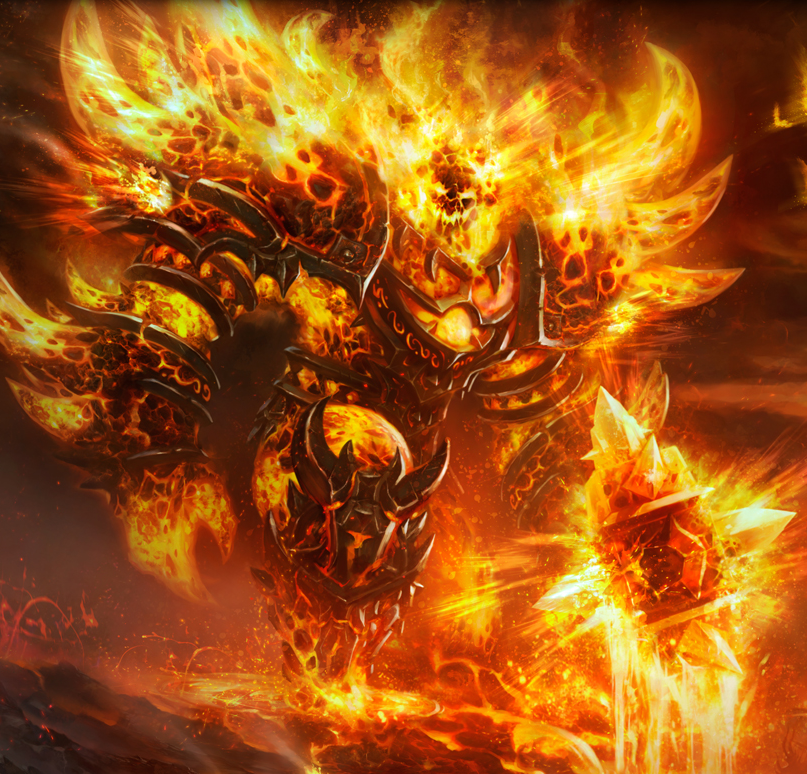
    Data found within the update, now live, points to three new card backs; one named as “Molten Core”, another named after the feared legendary Ragnaros, and one called the Golden Celebration.

    Every month, Blizzard adds a new card back to Hearthstone, and in this case it appears that Ragnaros will be the latest design. However, the internal developer notes attached to the other card backs appear to hint at the rumoured next adventure mode.

    According to a decryption of the patch data, undertaken by Hearthhead, the Molten Core card back is fixed with a developer note which reads “purchase brm presale”.

    Ragnaros

    Fans analysing this believe it’s a reference to Blackrock Mountain, a zone on World of Warcraft, which is suspected to be the setting for the new adventure mode. Blizzard has yet to comment on this, but PCGamer notes that Blizzard will make a “PAX East announcement next Friday”.

    Hearthstone’s previous adventure mode, The Curse of Naxxramas, was also based on a zone in World of Warcraft.

    A previous, unconfirmed rumour suggested that the next Hearthstone expansion is due to ship in April. It should be noted that some of the details coming from this rumour have already proven to be false.

    One of the game’s key developers, Ben Brode, recently told GameSpot that adding a new adventure mode was a case of correct timing.

    “Our goal going forwards is to figure out the right pace of adding in more expansions and adventures,” he said.

    “We have to time it so that players are ready for a new batch of cards. We’re not going to go in too fast either.”

    The third card back, called the “Golden Celebration”, is likely to be a reward marking the one-year anniversary of the game. Hearthstone officially launched on March 11 last year.

    Powered by WPeMatico