You heard about Smash Run, can you figure out the rest of the modes in Super Smash Bros. for 3DS?
Author: dpugh007
-
Nintendo 3DS – Super Smash Bros. for 3DS 2014 Trailer
-
Middle Earth Shadow of Mordor 30 Minutes of Gameplay Walkthrough
Middle-Earth Shadow of Mordor, a prequel to The Lord of The Rings, delivers a dark story of retribution as players will assume the role of Talion, a ranger who loses everything on the night of Sauron’s return to Mordor. As Talion’s personal vendetta unfolds, players uncover the mystery of the Spirit that compels him, discover the origin of the Rings of Power and confront the ultimate nemesis.
With a dynamic next-gen game environment powered by the Nemesis System, players orchestrate their personal plan of vengeance as they bend Mordor to their will; ensuring a unique experience to all players. Every enemy players face is a unique individual, differentiated by their personality, strengths and weaknesses. -
Forza Horizon 2: E3 Demo Developer Commentary – Lamborghini Huracan
Forza Horizon 2 creative director Ralph Fulton discusses Forza Horizon 2 as we drive the Lamborghini Huracan in the E3 demo of the game on Xbox One.
-
Persona 4 Arena Ultimax Teaser
The ultimate tag team returns to present another super-heated battle. New characters have entered the arena. The fight moves outside the TV…to the real world!
Coming Fall 2014 for PlayStation 3 and Xbox 360.
-
The Golf Club
A next generation Golf Simulator developed by HB Studios. The Golf Club is the new golf sim from HB Studios featuring procedurally generated courses, online play, tours and tournaments — and more!
-
Diablo III: Ultimate Evil Edition Review
Diablo III: Ultimate Evil Edition brings both Diablo III and its expansion, Reaper of Souls, to consoles (including the series’ debut on PlayStation 4 and Xbox One) in one package with several new, exclusive features.
-
Valiant Hearts: The Great War Review
A video game about war is perhaps the least novel thing you could create in our medium today, which is one reason why Valiant Hearts: The Great War is such a surprising thing. Developed by Ubisoft Montpellier, Valiant Hearts examines the aspects of war that are most often brushed past or ignored altogether in games. This is a game concerned with the human element of war, the stories of the people forced to fight in these terrible conflicts, the people displaced by violence, and the relationships that keep them going in the face of terrible hardship. In some respects, it’s a clumsy effort. Its narrative relies too heavily on situational convenience and generic villainy at times, and its gameplay is rarely the best thing about it. Yet Valiant Hearts remains compelling throughout its half-dozen hours, thanks in no small part to its deft handling of the many emotional highs and lows that make up its small, but wonderful tale.

Whether you’re a history buff or just want a good story, Valiant Hearts delivers in surprising ways. Set against the backdrop of World War I‘s western front, Valiant Hearts tells the story of four people whose lives are gravely affected by the conflict. Karl is a young, German-born man living in France when the war begins, and despite his protestations, he’s sent from his home back to Germany, forced to fight for a nation he no longer calls home. Emile, Karl’s father-in-law, is forced to take up arms for his home nation of France. Elsewhere we also meet Freddie, a burly American motivated to fight largely by personal vengeance, and Anna, a Belgian medic who moves from battle to battle doing whatever she can to patch up the wounded.
These four protagonists (along with a trusty dog who helps out from time to time) find themselves floating in and out of each other’s lives, reuniting during various battles, only to be torn away from one another by one horrible circumstance or another. At times the plot strains itself to find ways to bring these four people together, given that they’re often spread across such a massive battleground. But those moments of plot convenience are forgivable by virtue of how endearing these characters are. Their stories are fleshed out primarily from collectible diary entries, but they also communicate a great deal wordlessly. Apart from a few bouts of narration and some language-specific grunting, there is little dialogue in Valiant Hearts. Instead, the game’s visuals are tasked with doing the heavy lifting here. Every moment of pain, sacrifice, and (occasionally) joy is communicated using the game’s comic book-inspired artwork, and it works surprisingly well.
It’s not just that Valiant Hearts is a beautiful looking game (it is), but rather that its art is used so effectively to communicate to the player. It’s in each character’s facial expressions, and the small environmental details, that the game’s emotional resonance lives. Valiant Hearts is expressive in a way that big studio games often aren’t, relying on a subtlety of delivery that implies a trust in its players to empathize with its heroes, despite spelling out only the most basic details about each of them. It never yells to the player about what they’re supposed to be feeling; it never shouts about much of anything, actually. There are certainly big, sweeping moments of action within the game, but they’re dwarfed in number by the scenes focused on individual characters and the horrors continually befalling them.

You can press a button to pet the dog any time you like. I pressed that button a lot. Like, A LOT. It’s worth noting that Valiant Hearts isn’t looking to be an especially “realistic” portrayal of World War I. The game pulls no punches when portraying the grotesqueries of the battlefield–moments where you’ll find yourself running through hails of machine gun fire, climbing over the bodies of your fallen comrades, are frequent–but the overall tone of the game is a bit lighter than its subject matter lets on. Take, for instance, the near-total lack of combat in the game. In the rare instance that you do have to fight an enemy soldier, you’re never handed a gun and asked to shoot anybody (outside of a lone tank sequence where you blast away enemy artillery and swooping fighter planes). Instead, Emile just conks enemies on the head with a wooden spoon, a nod to his role as a military cook during one period of the war, while other characters never attack at all. Another example is a pair of quickly paced chase sequences. Here you take control of a sputtering cab that mostly propels itself, while you simply dodge and weave between enemy fire and other obstacles while classical music accompanies the rhythms of the action. It’s goofy stuff that would, on paper at least, seem wildly out of place in a game so seemingly dour in tone, but somehow Valiant Hearts pulls it off without coming across as jarring or distracting.
The only time Valiant Hearts really lost me was when it opted to drum up some artificial conflict. So much of the game is about the kind of faceless evil that makes up war, the constant charging into certain death against an enemy you know almost nothing about. That changes after a point, when an evil Baron from the German side starts appearing just to put a face to what you’re fighting against. He’s a pointless character, a twirling mustache there to sneer and drop bombs on you when the gameplay demands a more specific threat, and it’s the only part of the game that feels out of place. How the game chooses to pay off the Baron’s plotline is ultimately of little consequence to the bigger, more interesting stories at play, which makes his inclusion seem all the weirder.
Valiant Hearts also lost my attention during a few particular gameplay sequences. All of Valiant Hearts’ campaign consists of lightweight puzzle solving, peppered with the aforementioned minor combat bits and even some light rhythm gaming. In each stage, you are presented with some maze of problems to solve–an injured civilian is trapped behind a pile of debris you must navigate your way to, a prison camp can only be escaped after you perform tasks for various people, a detonator must be found and recovered before you can blow up a German fortress, and the like. These simple navigation puzzles are rarely of the sort that will stump any experienced player, but there’s mostly just enough challenge there to keep you from feeling like you’re just mindlessly doing chores before getting to the next story beat. Mostly. A few stages are outright dull, while others seem like neat ideas that never feel fully fleshed out–the minigame that accompanies Anna’s patching up of injured folk is particularly pointless. Even when the puzzles are better, Valiant Hearts is never particularly thrilling. Given its more contemplative tone, that’s not surprising, but it does highlight the challenge of trying to turn something so decidedly graphic novel-like into a game. While Valiant Hearts has numerous poignant moments, few of those are during the most interactive portions of the game.

Its gameplay is fairly mundane, but it serves the story the game is trying to tell. And that story is very much worth seeing through to the end. Fortunately, one of those few great interactive moments closes out Valiant Hearts, demonstrating definitively that there was value in turning this story into a game after all. It’s a simple thing, something you won’t even realize until the consequences are staring you right in the face, and it serves as a perfectly heartrending conclusion to a sad, but beautiful little story. Sometimes the most important thing a game can do is just stick the landing, and Valiant Hearts does exactly that.
Valiant Hearts isn’t going to challenge many players’ abilities, but it may challenge any preconceived notions about how video games are meant to tackle subjects like war. There are certainly faults to be found with its underlying game design, but in a game that cares this much for its own characters–arguably as much as it cares about the history of the war itself, which is quite a lot–I found it difficult to get hung up on the occasional uninteresting fetch quest or rhythmic minigame. Its rewards are far more emotional in nature, the kind you find in any good story, regardless of medium. Seek this one out, and see it through to its conclusion. It’s worth it.
Powered by WPeMatico
-
Diablo III: Reaper of Souls – Ultimate Evil Edition Review
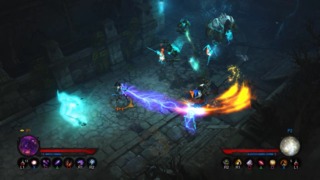
It’s handy to have another warm body around, if only to soak up some of the damage heading your way. Diablo III has changed quite a bit in the two years since its initial release. Things like “real money auction houses” came and went, the loot system got redesigned, and an expansion was released along with a new adventure mode that gives you a new way to grind through the game without having to see the story beats time and time again. An exciting action-RPG got better and reinvigorated by that work. Now it’s all bundled up into one pack for consoles. This “Ultimate Evil Edition” is a fine version of the game with effective adjustments that make the game just about as playable with a controller as it is with a mouse and keyboard.
The key to all that, of course, is direct character control. As opposed to left-clicking your way around the world, this console version of Diablo III simply lets you walk around using the left analog stick. It’s a big difference, but one that still feels natural, especially if you were raised on console games like Baldur’s Gate Dark Alliance. The right stick is used for a exclusive-to-consoles roll move that gives you a bit of mobility, but it never feels especially crucial. Of course, the rest of the controls have also been adapted to fit a controller, so you’ll eventually have like six abilities mapped to different buttons on the controller. You can swap those abilities around however you like, which either means that you’ll be able to find a setup that feels natural for you or you’ll constantly be confused about which button does what, depending on what type of player you are. It all works just fine.
The game’s interface and menus have also had to be rebuilt for controllers and living rooms, meaning there’s a ton of big-ass text in the menus. The equipment and skills sections are built with radial menus, making it fairly easy to get around and check out different item types. The arrows on each item make it easy to see, in a basic sense, if an item is going to help you out or not. And there’s a junk system in place to make it easy to flag the stuff that you want to sell or salvage next time you’re back in town. It took me an hour or two to get used to each system, since each one feels like it’s about one or two button presses too many, but once I became familiar with how Diablo III handles things, it eventually became second nature. Still, having to button deep into menus to dig into the numbers and real stats on an item is kind of a pain, and it’s the one spot where I missed the PC’s relative elegance.
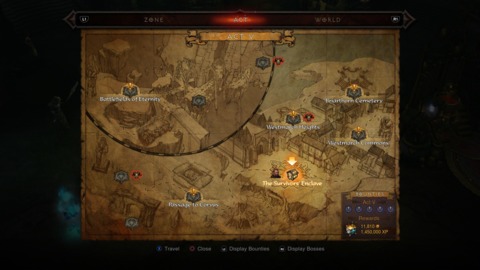
Adventure mode lets you chop up the world into bite-sized chunks. Beyond that, this is Diablo III with the Reaper of Souls expansion included. The story is a little boneheaded but largely stays out of the way, giving you hours and hours of satisfying action-RPG combat and interesting abilities to choose from as you devise numerous ways to blow up skeletons, demons, shambling tree men, evil goat men, devils, fallen angels, zombies, vomiting zombies, barrels, tables, and whatever the hell else happens to be around your character when things start jumping off. The destructible set dressing strewn across Diablo’s dungeons ended up being one of my favorite visuals in the entire game–as you begin combat, anything that isn’t bolted down just seems to get blown up during the ensuing fray.
One thing I’ll say about the way this Ultimate Evil Edition is packaged is that the game doesn’t do a great job of transitioning you from the main campaign into what used to be expansion content. Reaper of Souls exists as a fifth act to the main game, so once you beat the main game’s final boss, rather than get any sense of meaningful closure you’re just thrust into the next area after a couple of cinematics. Without the context that Act V is separate from the rest, the transition feels disjointed and rough. Also, the game has a closing cinematic, but since it’s the closing cinematic for the expansion, it doesn’t really feel like it has enough of a meaningful impact. It goes out with a whimper, not a bang, complete with a dialogue window that pops up after beating the final boss that pretty much says “push X to go to the main menu.” It makes an already ignorable story feel even flimsier.
That’s why it’d be great if you could just hop into adventure mode without beating the game’s story first. Adventure mode lets you skip around the game at will and take on an endless series of bounties set across the same landscapes used in story mode. Most of them are relatively short, so if you have an hour or two, you could complete a set of five bounties and be on your way. It’s a great way to segment the game into smaller, more manageable chunks, if that’s your thing. The endgame mode also allows you to explore various “rifts,” which are separate areas that throw enemies together in new configurations and help ensure that you’ve always got something to do, whether you’re grinding up to level 70 or taking it beyond the maximum level with the game’s paragon system, allowing you to further build up max level characters. There are also 10 different difficulty settings. Do yourself a favor and start on hard, as a minimum, and don’t be afraid to creep up to something higher if you’re getting bored. The difficulties are really misnamed–hard most definitely isn’t “hard.”
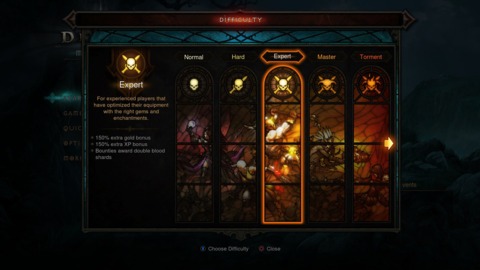
Feel free to work your way up the difficulty tree, the names sound scarier than they actually are. The game looks fine on the PS4, roughly in line with what you’d expect out of the PC version at 1080p, though the frame rate would pop and hitch on occasion, usually when large enemies are in the process of blowing up and spitting loot all over the ground. There’s some great music to fit with the action and, overall, it presents quite well.
It’s great with a group and fine if you’re playing alone, but I’d still say that, if you’re able, the PC version is the one to get unless you’re specifically looking for a local co-op mode. Barring that, though, the console versions of Diablo III are well-built and adapted to a controller quite well, so at some point it becomes a matter of preference. If you’re excited about the genre and love to smash enemies to watch a series of numbers go up as you collect better and better gear, this is a good way to fulfill those needs.
Powered by WPeMatico
-
Shovel Knight Review
How I feel about today’s shooters is probably how others feel about the deluge of nostalgia-influenced platformers. There are always exceptions to the rule, though. Shovel Knight is one of them, a game that feels as though a historian unearthed a long lost cartridge from the late ’80s, as game developers were making the NES perform tricks never thought possible. The debut game from Yacht Club Games feels like an unearthed relic, one I’m happy has been found. Shovel Knight feels both old and new, mining our collective memories for the right reason: making a good video game. And Shovel Knight is a very good video game.
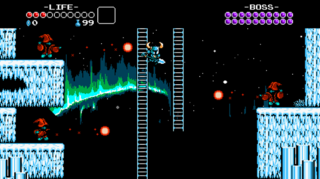
Shovel Knight feels like a game that fell out of a worm hole. In a good way. Shovel Knight has a story insofar as any of these games have a surface-level justification for what’s happening. Shovel Knight and Shield Knight have long protected the realm, but the world is soon corrupted by The Order of No Quarter (which just might be the best name for a group of enemies since…well, forever), lead by The Enchantress. Shovel Knight is separated from Shield Knight, and it’s up to Shovel Knight to start digging to victory. In practical terms, this means players are running around as Shovel Knight, and occasionally navigating an overworld map that gives limited agency over which major enemy you’ll tackle next.
The problem with many of these kinds of games is they’re often unsure which master to serve, and get caught up praying at the altar of the past. Shovel Knight could not exist without the 8-bit classics, sure, but it’s not explicitly beholden to its conventions, either. It’s a decidedly modern game leveraging gaming’s history as a starting point. It’s a means to an end, not the end itself. That’s where so many of these games get it wrong.
DuckTales and Mega Man fans will feel right at home with Shovel Knight. The character’s weapon–yes, a shovel–is used to attack enemies, destroy objects, and bounce on stuff. Most of Shovel Knight’s attacks, even when he begins acquiring magical relics in each stage, require him to get very close to obstacles in his path. With rare exceptions, Shovel Knight is incapable of standing on the other side of the screen and slowly clearing a path forward. Being able to pogo stick on top of enemies gives players flexibility in their tactics, allowing them to play a cautious form of offense that provides room to breathe. Understanding the physics of one’s shovel-assisted jumps is crucial to finding the game’s myriad secrets, as well. Most are hidden behind both marked and unmarked walls that must be destroyed, and others require deviously timed jumps that let you cover great distances, both horizontally and vertically, that would be impossible otherwise.
The secrets are half the fun in Shovel Knight, too. They’re everywhere, making every screen more than just a set of hazards to navigate. The secrets often contain plentiful treasure, the currency used to purchase upgrades for Shovel Knight. Both health and mana upgrades are available in limited quantities, in addition to armor with certain bonuses (i.e. dropping less treasure after dying) and new shovel attacks (i.e. shooting a ground-level fireball while at full health). Shovel Knight can acquire a host of magical abilities, as well, which can be purchased by finding a vendor within a level or completing the stage and finding that same vendor back in town. Unlike Mega Man, weapons aren’t explicitly linked to bosses, even though stages are themed around the last encounter.
Part of what makes Shovel Knight stand out is what doesn’t stand out. The controls feel right. While playing, the character always landed where I wanted him to. The controls are tight, responsive, and do exactly what you want. That may sound simple, but without this, Shovel Knight wouldn’t work. We often focus on games that get this wrong, not games that get it right. When it feels right, you don’t notice it. That means the developer nailed it. When it doesn’t feel right, it’s terribly obvious. Super Meat Boy is a fantastic game for many reasons, but Super Meat Boy works because the player feels in control. It’s why I’ve never enjoyed LittleBigPlanet beyond the charming aesthetic and wonderfully curated soundtrack. A sequence of tricky jumps is an entirely worthy task to ask of a player when they can reliably know the coming deaths will be entirely their fault.
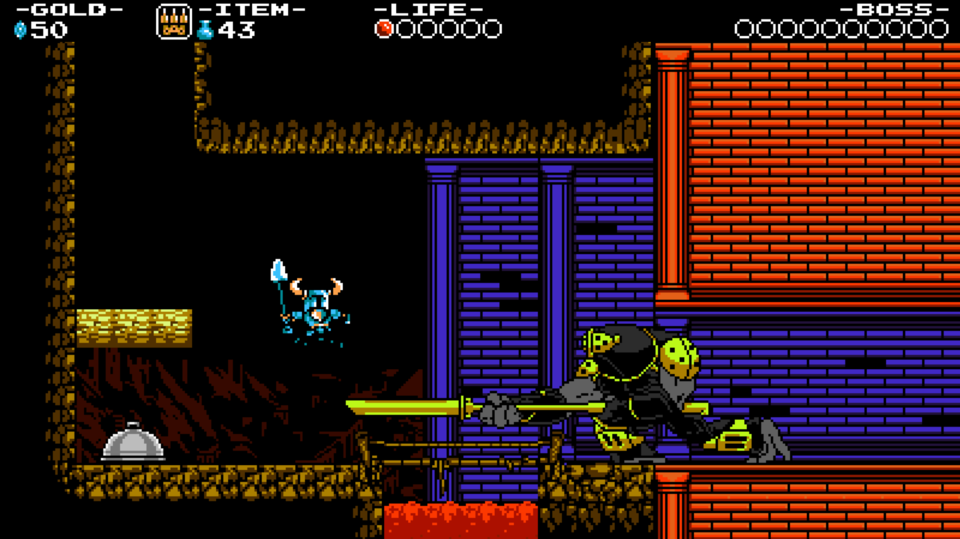
Some enemies are small, some enemies are big, and some enemies will take up the whole screen. It’s the little things in this game, too. The delightful idle animations for the world’s many characters, an elaborate dance sequence by a giant fish for no reason, the discovery of a hidden boss in a room full of hats, using a fishing rod to find off-screen treasure. These touches extend beyond the caretakers of the game’s visuals, too. For example, you can jump higher than what the game is currently showing on the screen at any time. If you’re at the top of the screen during a forced scrolling sequence, your head doesn’t butt up against an invisible barrier. You can actually leap into the blackness of the UI. It’s a small touch, but one that actually proves useful.
That said, there was a cocktail of emotions when the credits rolled on Shovel Knight. I was upset the game had come to an end, since I’m now left waiting for the hopefully inevitable sequel. But I wondered if Shovel Knight played it too safe. One cannot speak of games gone by without acknowledging how brutally difficult they were. If you, like me, were a kid granted one, precious game every few months, you milked those games for all they were worth. One reason that worked was because the games were so god damned hard. (My mom actually called a customer support line to complain after my brother and I finished Turtles in Time in two hours.) The challenge wasn’t always earned, and often it was cheap, but you had to legitimately cross the finish line.
That’s not the case in Shovel Knight, an especially easy game by classic standards. I died a handful of times, a few spots gave me some real trouble, but I wouldn’t call Shovel Knight hard. It’s a very accessible platformer for its type, which might come as a disappointment to some. Rather than embrace this facet of its influences, Shovel Knight asks players to accomplish other forms of herculean tasks, such as finishing the game without dying or health upgrades. For some, that will prove a worthy goal to chase, a reason to spend potentially hundreds of hours with Shovel Knight. But not for me. I wanted the game to ask more of me upfront, as I’m far less interested in masochistic challenges (the game’s achievements are called “feats”) layered on top of the game. Instead, I breezed right through Shovel Knight, and was left wishing the game had pushed me much, much harder.
My questions about the game’s difficulty wouldn’t matter if were talking about a lesser game, though. I simply wanted to love Shovel Knight even more than I already do. Shovel Knight is an exceptionally well-made action platformer, one worthy of being celebrated far beyond the nostalgic foundation it’s built upon. Shovel Knight won’t be the last old school game made in the modern age, but it’s unlikely many others will be as much fun.
Powered by WPeMatico
-
Arcana Heart 3 LOVE MAX!!!!! – Trailer
Lose yourself in the world of Arcana Heart 3: LOVE MAX!!!!! for Playstation3 computer entertainment system! Arcana Heart 3: LOVE MAX!!!!! provides players with crazy combos, 3D environments and 23 adorable combatants in this fully feminine fighting game.


