As a new indication of gaming’s broadening cultural relevance, two people who work in the industry have made TIME’s list of the 30 most influential people on the internet.
Joining a power-list populated by the likes of Barack Obama and Ta-Nehisi Coates is PewDiePie, the idiosyncratic twentysomething gamer who posts Let’s Play videos on YouTube, and Anita Sarkeesian, the award winning feminist games critic.
In the preface to its list, TIME wrote that “the rise of social networks has levelled the playing field, allowing unknowns to command audiences rivalling those of real-world leaders, even if by accident.”
PewDiePie, whose real name is Felix Kjellberg, hosts the most subscribed YouTube channel in the world, with a mass of more than 35 million fans. Kjellberg tends to make videos independently, but sometimes does promotional work for games companies. In November 2013, developer Techland revealed gameplay footage of its Dying Light project via a PewDiePie Let’s Play that reached close to five million views.
Anita Sarkeesian’s relationship with her audience, however, is more complex. While the essayist is widely praised for her work, with supporters including the likes of Tim Schafer and Neil Druckmann, she is routinely attacked by internet commentators, who typically do so anonymously.
In an ironic twist, the volume of hate against Satkeesian and her message–that games should strive for universal appeal and positive messages–has propelled her popularity. In October, she appeared on national television, on The Colbert Report, to discuss her views on gender equality in games.
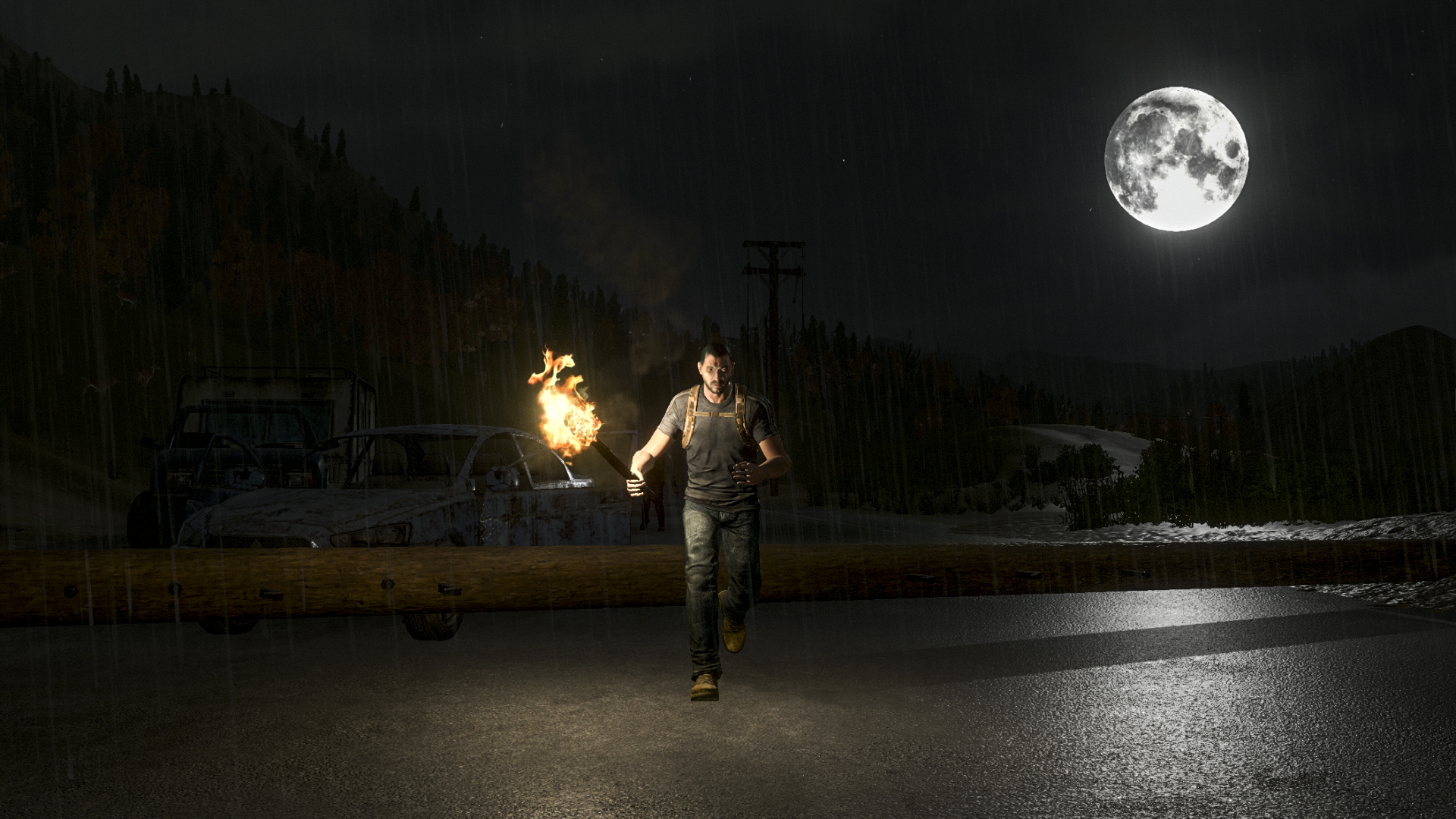
H1Z1, the open-world zombie survival game from the studio formerly known as Sony Online Entertainment, has surpassed one million sales on Steam.
Daybreak Studios, the game’s developer that became independent from Sony in February, announced the sales landmark on Twitter. John Smedley, the president of the company, exclaimed: “We have sold 1M copies of H1Z1 on Steam!”
Currently the MMO is only available as a Steam Early Access title, meaning players are experiencing the project in alpha and beta state. When H1Z1 first launched, in January, strong demand for the game led to numerous server issues.
In March, Smedley said the company would soon be adding a monthly pass allowing unlimited access to a game mode called Battle Royale, a last-man-standing multiplayer event.
Currently, the game provides free access to Battle Royal, but eventually it will become a premium mode that requires either a monetary fee or a ticket that could be earned in-game.
However, this monetisation was postponed after fans suggested the code was too unfinished to reasonably charge players for it.
Smedley acquiesced to this, explaining: “What’s clear is that you expect more from us in terms of quality level so that’s what we’re going to do. We’ll focus on bugs, awesome new stuff and adding a ton of features to Battle Royale and our main game to make you feel like you’re more than happy to pay for it. Only then will we charge for it.”
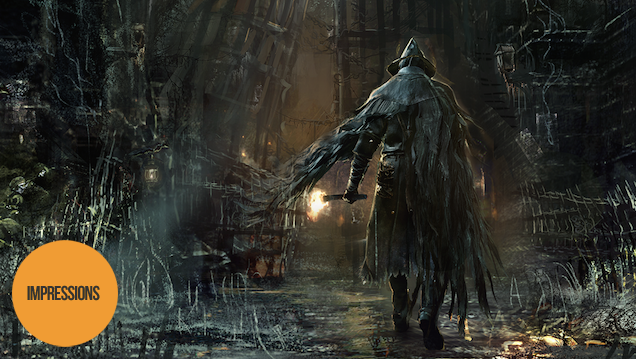
As a follow up to From Software’s Souls franchise, Bloodborne will be very familiar to those who have followed the series. The good news is that you absolutely do not need to have prior knowledge of the Souls games to understand, appreciate, and most importantly, play Bloodborne. For the seasoned Souls player, it would be a mistake to assume you can skip through the tutorials. Even if you manage to pull off the new visceral attack, you may not know how you did it, let alone how you can do it 100 percent of the time. You can also say that the regain system fundamentally makes this wholly different from Dark Souls.
We’ve detailed these new features as well as other tips and tactics to the guide below. These will greatly make your first couple hours in Bloodborne considerably easier in what is already a challenging game.
1) Your first encounter, a Lycanthrope
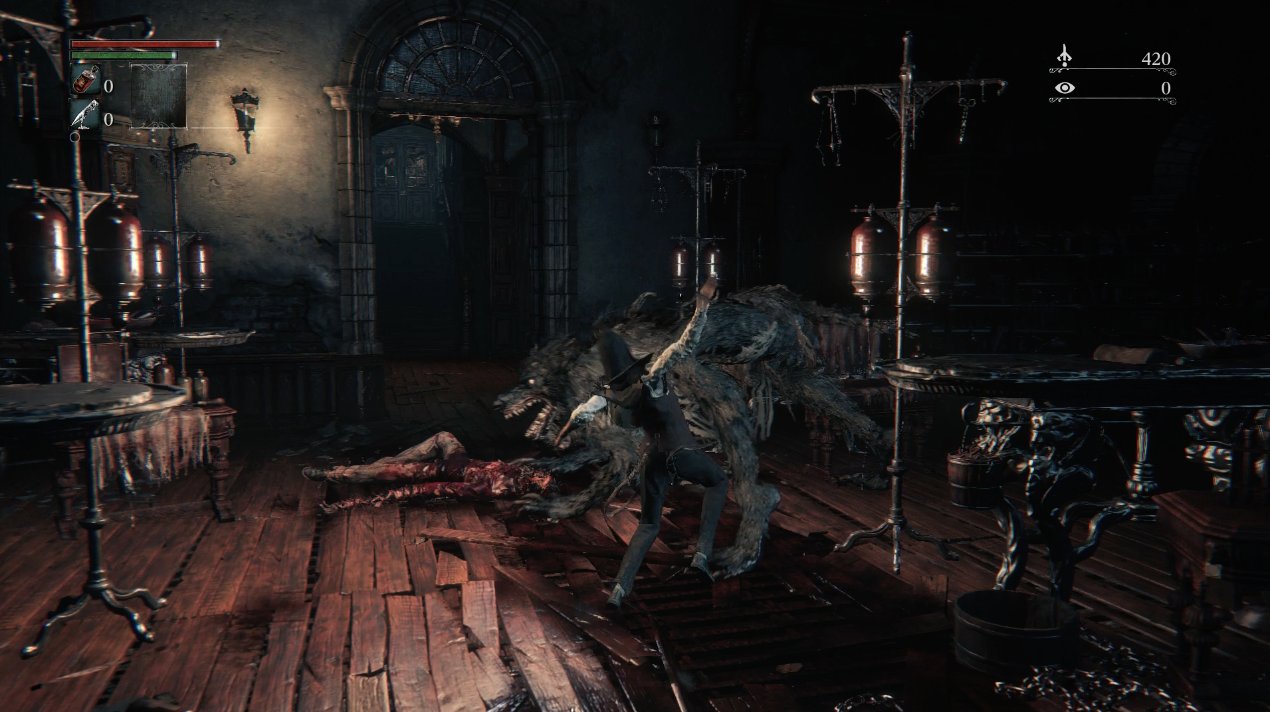
You’ve just awakened with no weapons, and between you and the rest of the world is a large, fierce lycanthrope. This is a good opportunity as any to get used to the combat controls, which is mostly driven by the shoulder buttons. Do not stress if you die. No reasonable person would expect you to defeat a lycanthrope with your bare hands. Upon your death, you will wake up in the seemingly heavenly hub area known as Hunter’s Dream.
Yes, you can beat the lycanthrope, though having prior experience with Dark Souls will only help so much. Along with our tips below, you should also know that holding down R2 lets you charge a stronger attack and complements the quicker attacks you can execute using R1. If you do manage to kill it, you still won’t be able to reach the safety of the hub area until you die. But maybe you don’t need it and the weapons you can get at Hunter’s Dream. Maybe you’re just that good.
2) Hunter’s Dream, a new kind of hub
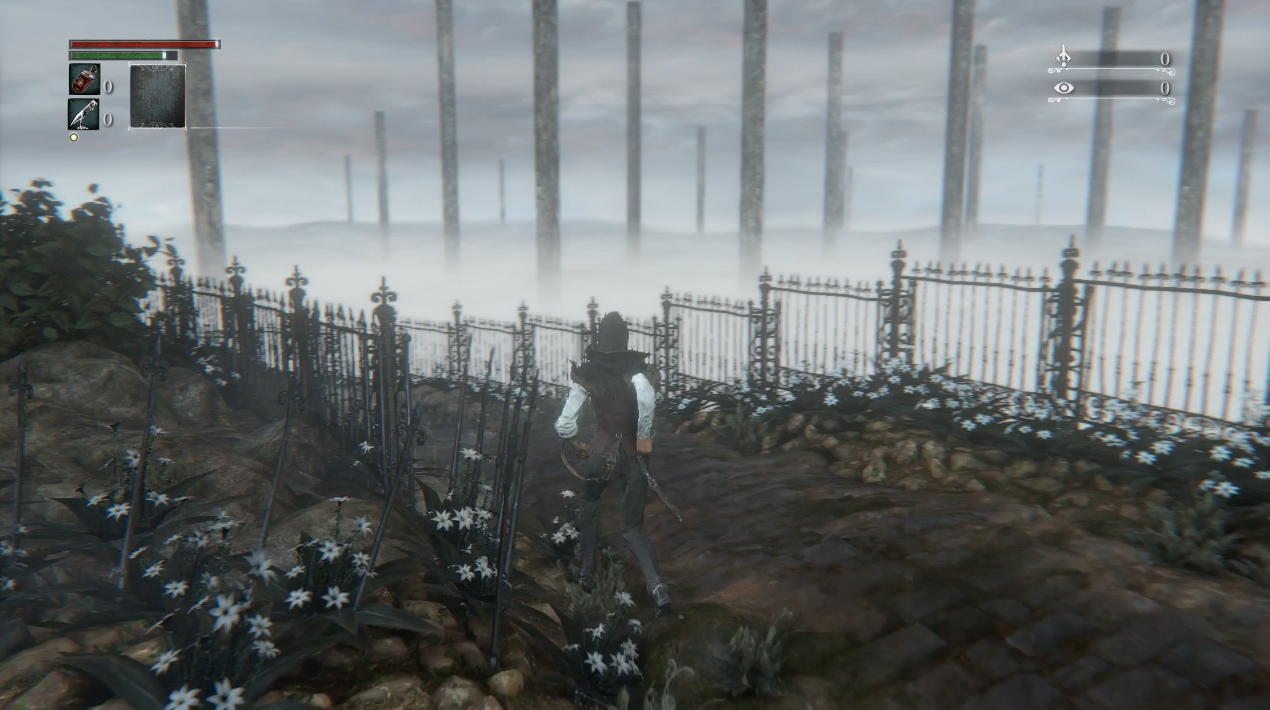
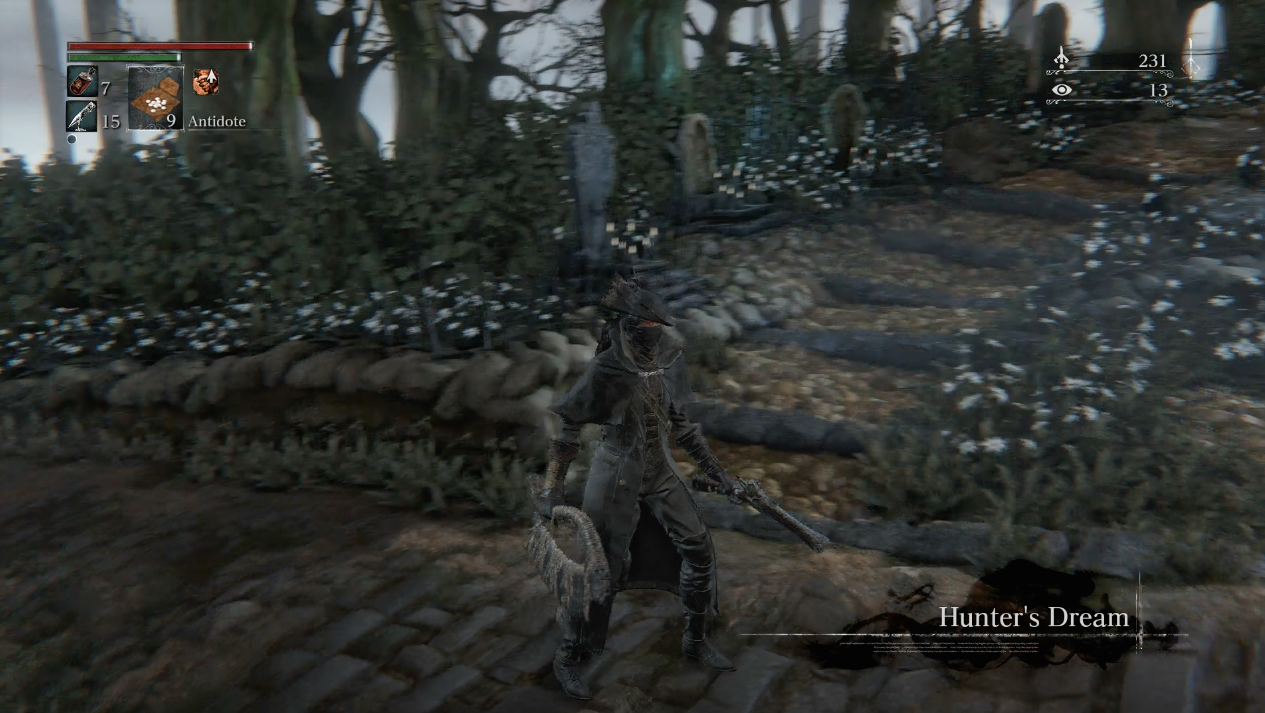
After you die, you awaken in Hunter’s Dream, your headquarters in Bloodborne. Not all its features will be available at the start but you can begin exploring the place and read some of the game’s basic tips and strategies. If you’re a Dark Souls veteran, you might be eager to know where you should level up. This can be accomplished by interacting with the doll in the middle of the map. Note that you won’t be able to talk to her until you encounter the first boss, the cleric beast.
3) Choosing your starter gear
When you arrive at Hunter’s Dream, you’ll get to arm yourself with Bloodborne’s starter weapons, with a melee weapon in one hand and a firearm in another. Here are some additional details about them to help you make an informed decision.
Saw Cleaver: This is the most balanced of the three weapons. Its extended version has effective reach while the compact version makes it light for a quick series of attacks. This makes for a solid pick if you’re unsure what to go with.
Hunter Axe: Direct and brutal, this axe has great damage, provided you can manage its slow speed. Its longer, alternate version has one drawback in that it needs to be held with two hands.
Threaded Cane: With its long range, this cane is great against crowds even if its damage isn’t as high as the other weapons. Its speed is also impressive.
Hunter Blunderbuss: This functions like a shotgun, meaning that its range is poor but can hit multiple targets at close range. It’s also more potent against a single target when you’re even closer. Note that a single shot only requires one bullet.
Hunter Pistol: Better range than the Blunderbuss but you can only hit one target at a time. It’s also effective in attracting attention from afar like the pebbles in the game.
4) The three most challenging non-bosses early on
Now that you’re armed, you can exact vengeance on the lycanthrope for killing you in that unfair fight. This is a good time to equip your weapons (by pressing option and then selecting the second row of blank boxes). Along with the lycanthrope, we’ve noted two other large sized enemies you’ll encounter in Bloodborne’s initial hour. Learning how to beat these three will train you in the fundamentals of combat, often applicable to bosses.
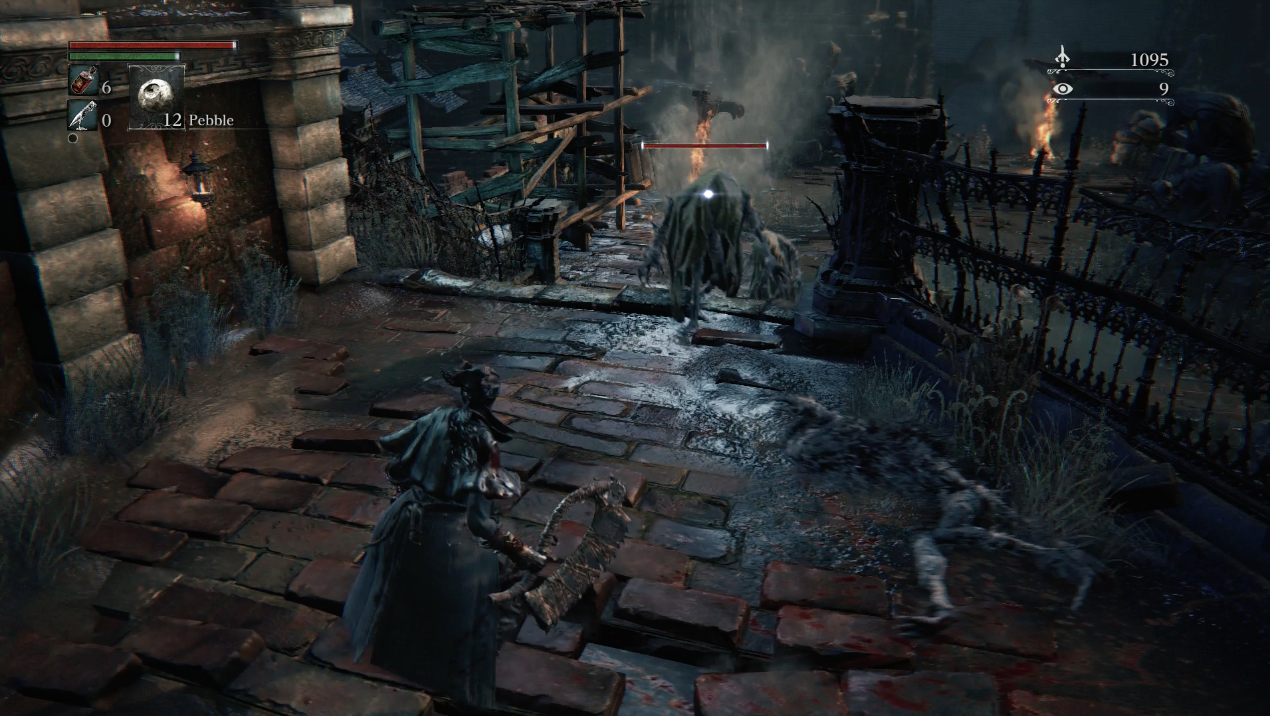
Lycanthrope: This fast-moving beast can be dealt with using quick melee attacks. Its animation before it lunges is easy to read so be ready to dodge and attack to its side (or better yet, its rear). You should be cautious about its lunges since there’s the possibility it can grab you by its teeth, which often results in death.
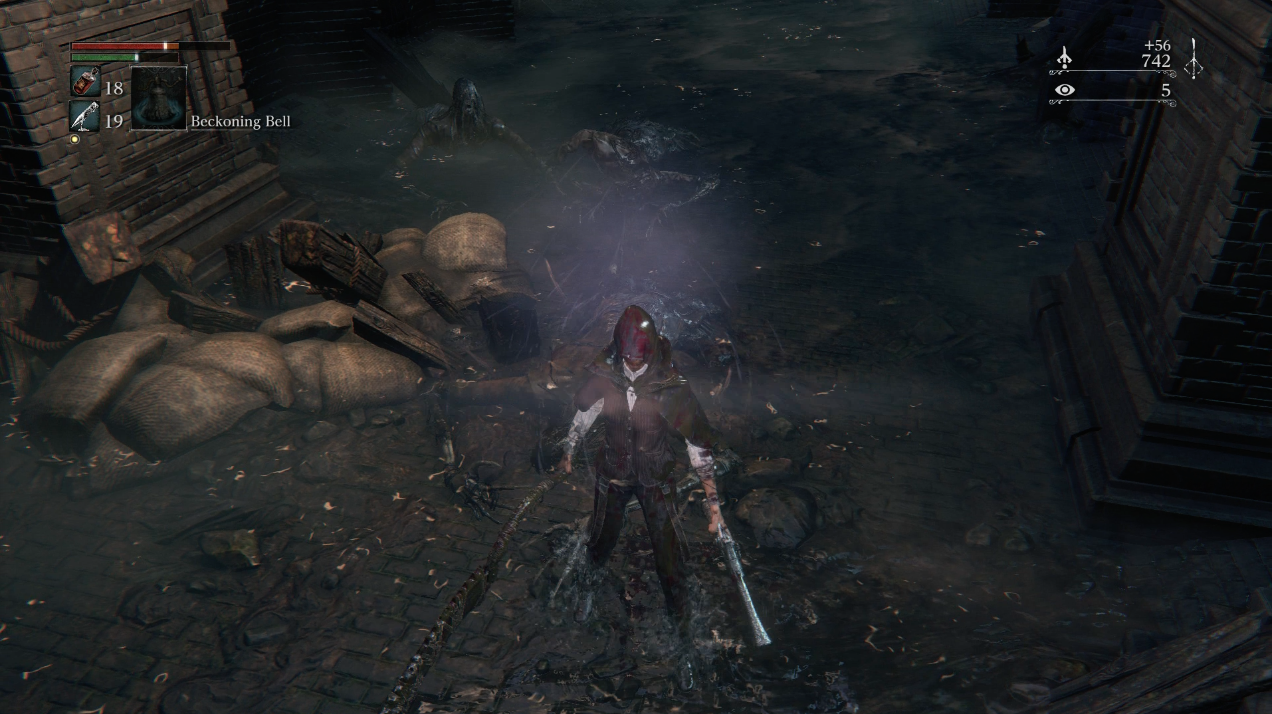
Gargantuan Pig: Your first encounter with this pig will most likely be in the sewer. He poses a unique challenge in that his size does not make combat easy in the confining and narrow passages of the sewer. Do not face him head on if his front half is up in the air; it means he’s about to slam down. You should also be mindful of his head swipes, where he swings his front half back and forth. Like many other enemies, his weak spots are at his sides and rear.
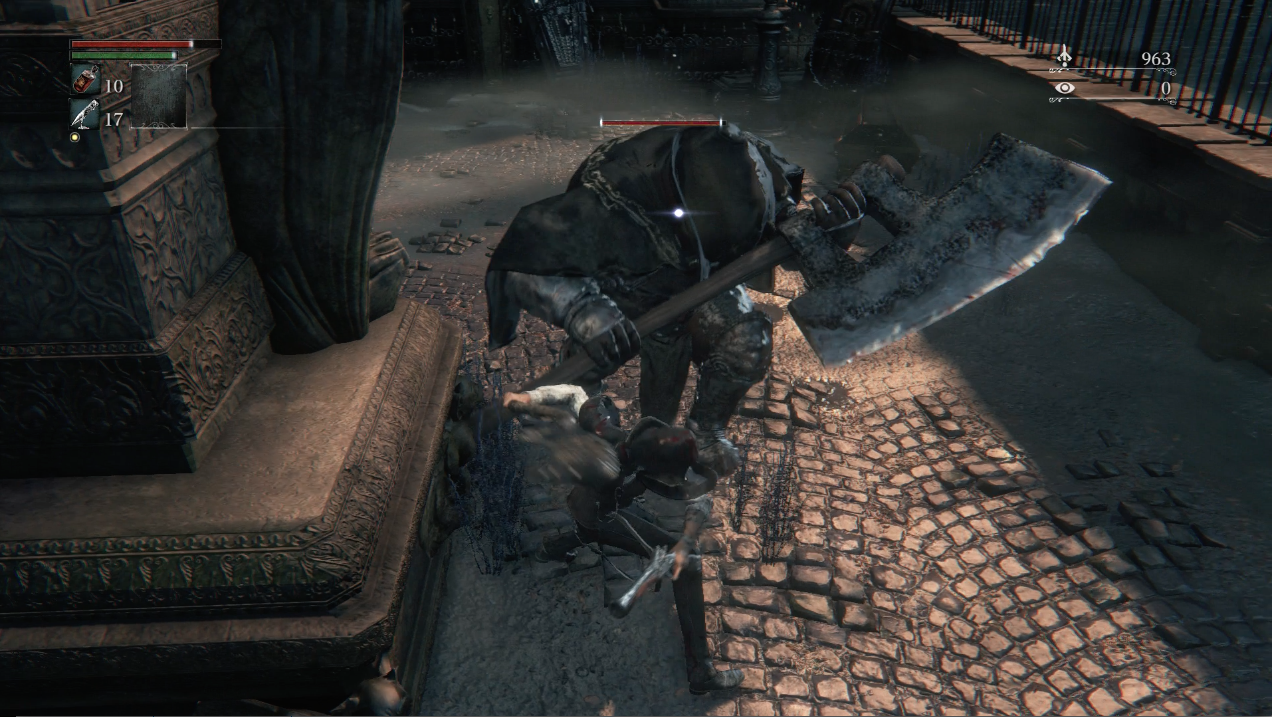
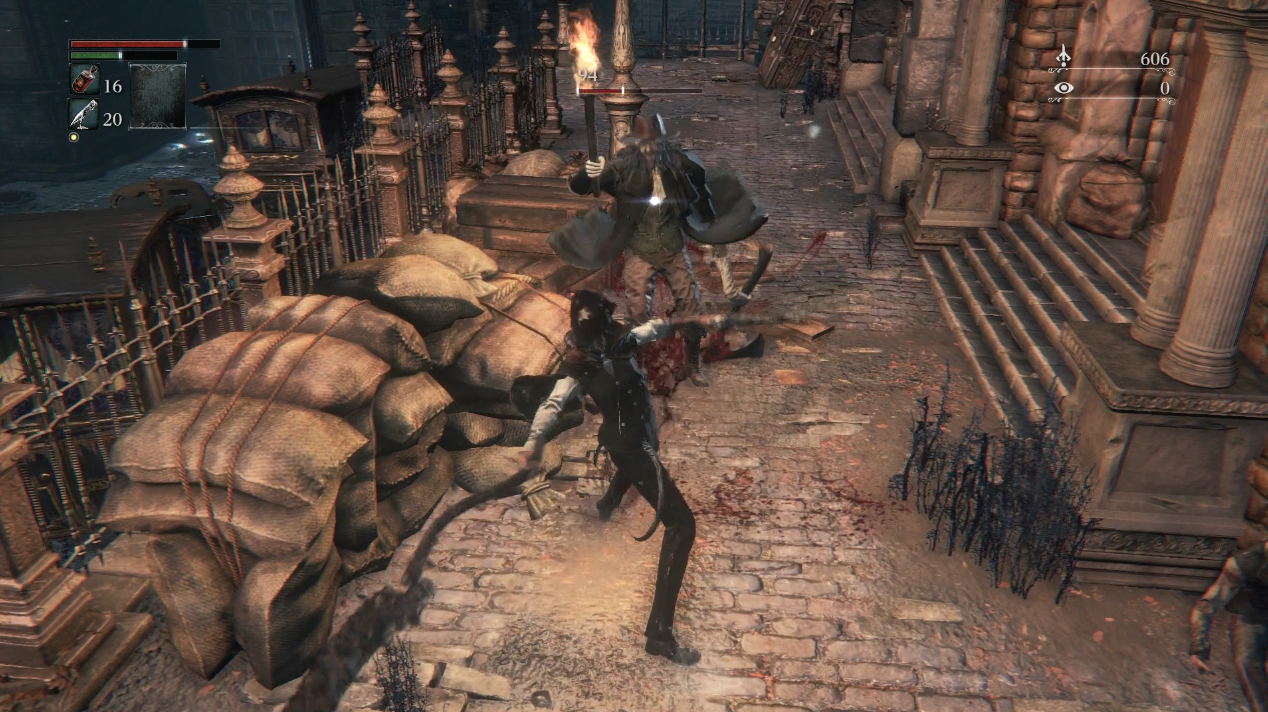
Ax-Wielder: If you want to cut your teeth in learning the fundamentals of close range defense, particularly dodging, you’ll want a duel with this guy. When you head down the stairs leading to the passing mob, make a U-turn and you’ll find this round, hulking foe surrounded by coffins and a carriage. He’s slow but deadly and makes for a great training partner in rolling moves. Practice with him to learn how to get behind an enemy.
5) Lanterns, the new bonfires
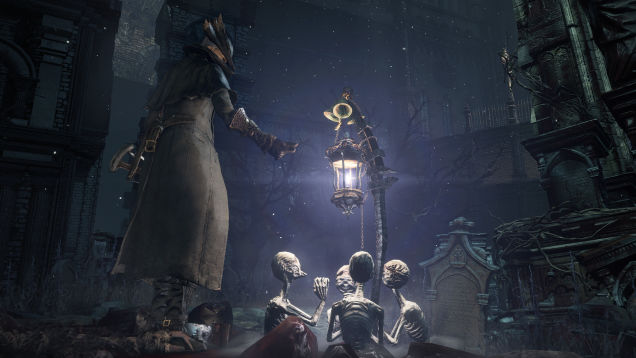
Lanterns are the checkpoints of Bloodborne, the equivalent to bonfires in Dark Souls. These are also your portals to Hunter’s Dream. You’ll be using the second Lantern a lot in the initial hour since the next one won’t be accessible until you defeat the first boss. The stretches between lanterns vary greatly throughout the game so plan your trips back to Hunter’s Dream accordingly. You can reduce the distance between Lanterns by unlocking shortcuts, which brings us to….
6) Navigating the world and creating shortcuts
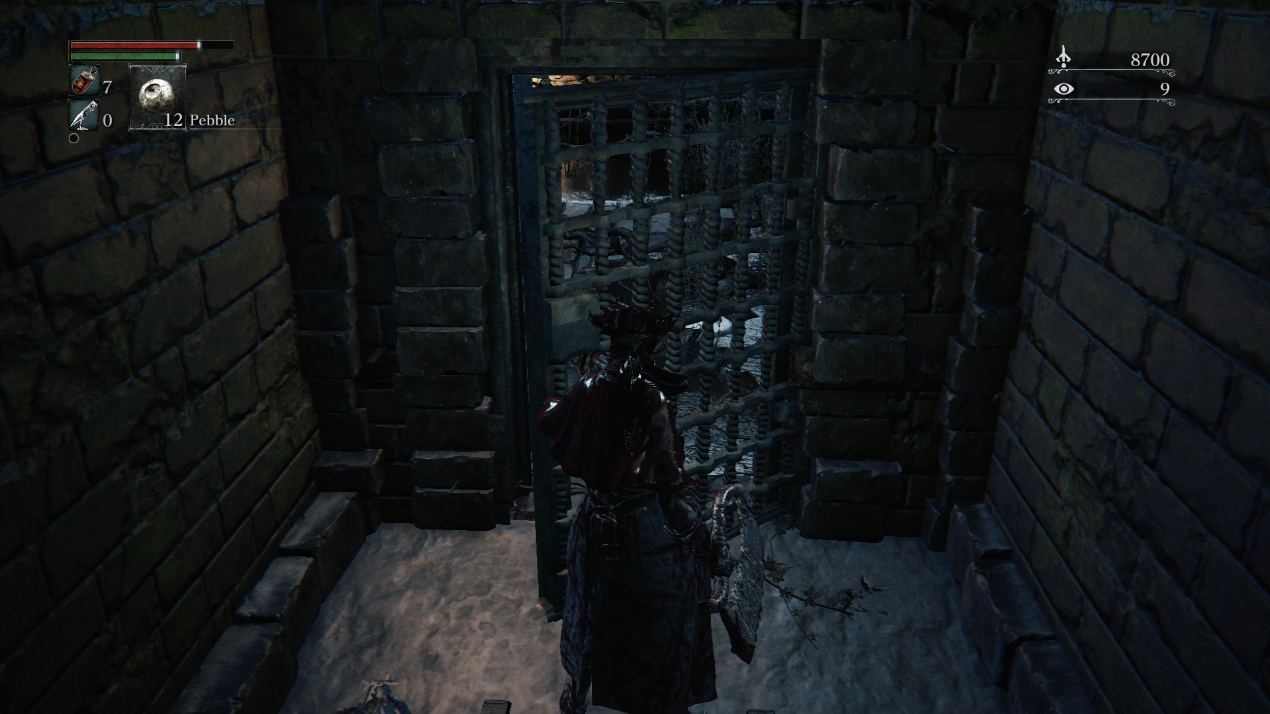
The initial area of Yharnam is a dense, labyrinthine district of a much larger city. It takes a while to fully explore, but once you’ve visited each section repeatedly, you’ll realize that these areas are actually smaller than they initially feel. Its world is fundamentally more akin to Dark Souls than Dark Souls II, which means that shortcuts abound. If you come across a locked gate, there’s a very good chance that there’s an path to the other side of that gate. With the gate open, two lanterns that were once far apart are suddenly close to each other.
7) Study every enemy
Every enemy in Bloodborne has their own unique attacks and moves. You’re encouraged to experiment, but also know that some enemies are easy enough that a series of quick attacks might be all you need. Some enemies in Yharnam are very easy to kill in a 1-on-1 fight, but you might want to plan a different strategy when they’re in crowds. That applies to the ground-hugging carrion crow, an easy creature to kill, but can also overwhelm you if it has friends.
8) Transforming weapons
A crucial part of combat is distance management, and the state of your melee weapons can make a huge difference against a particular enemy. With a tap of the L1 button, you can toggle between two weapon lengths. The longer version will obviously give you better reach, something to consider when taking on enemies with longswords and spears. Conversely, the shorter version of your weapon allows for quicker attacks.
Note: It is imperative that you keep your weapons in good shape. Do not wait for the weapon durability warning to appear. It’s not a case of whether the weapon works or not. Its effectiveness gradually reduces with every dozen or so hits. Repairing weapons costs very little so you should have them repaired every time you visit the Hunter’s Dream.
9) Know the Visceral Attack
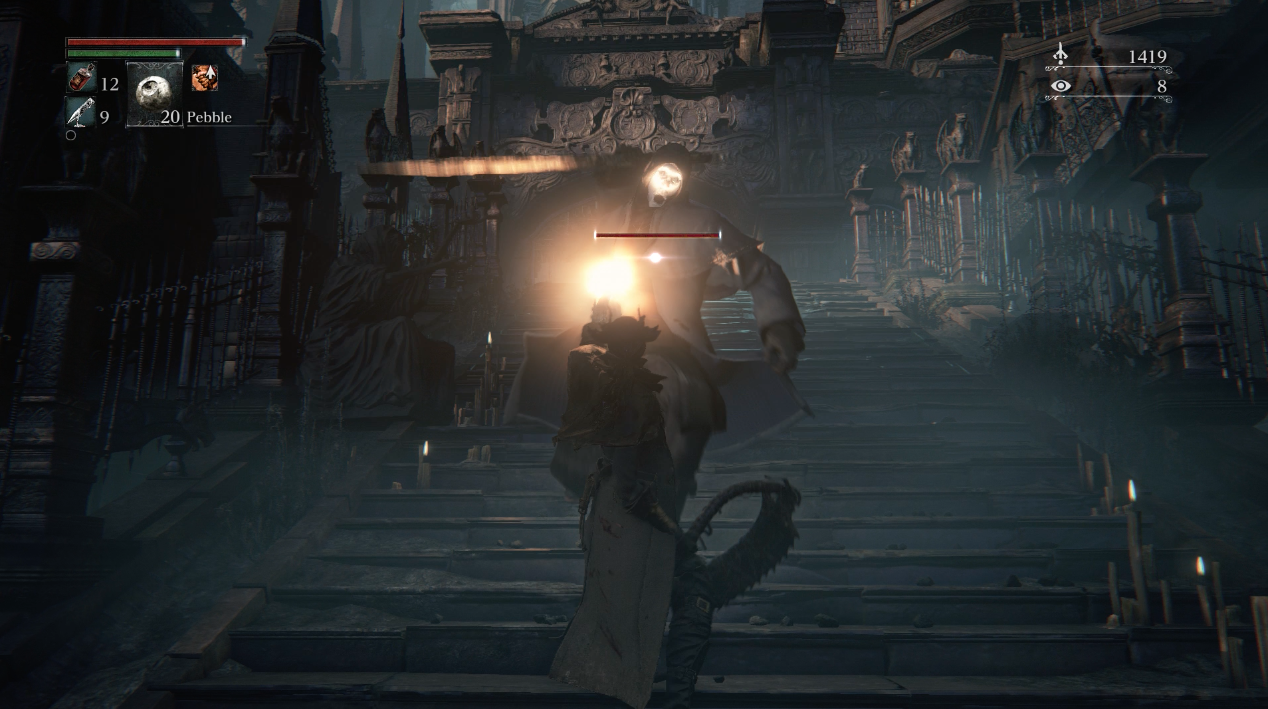
Bloodborne takes a page from counter moves in fast-paced action games by giving you an opportunity to stun an enemy and deal significant damage. With the right timing, a shooting an enemy in motion can stun him and bring him to his knees. You know you’ve accomplished this if you hear a high pitched metallic sound. Knowing when to fire depends on the enemy but the miniscule window of opportunity is usually when they’re about to strike you. One exception is the second boss, who can be stunned during his forward roll.
A stunned enemy will allow you to deal as many as six melee blows before they can fight back. If you’re right next your foe while he’s on his knees, you can deal a massive “visceral” stab attack. It’s deadly enough to finish off most non-bosses in a single strike and can take off significant health from the bosses.
10) What is the Regain System?
The Regain System is a new feature in From Software’s Souls-like games. It’s an integral part of combat where you have a very brief window of opportunity to regain lost health by dealing damage to the enemy that hit you. You’ll know you’ve regained some health if you glow red with a successful blow. Bloodborne encourages up-close, assertive combat as opposed to Dark Souls, which allowed you more opportunities to distance yourself and regroup. Expect heated exchanges where you’re not only trading blows with an enemy, but also trading health bars.
11) Blood Echoes and how to manage them
With every enemy you defeat, one of the numbers on the upper right corner of the screen increases. This is known as blood echoes, the equivalent to souls in Dark Souls. Note that you will not be able to redeem your blood echoes until you reach the first boss, the Cleric Beast.
The greatest risk in Bloodborne is in dying, because you end up losing whatever blood echoes you have. You do have an opportunity to gain them back, though. The catch is that you have to return to the scene of the crime and that includes the same enemies in the immediate area. Like Dark Souls, a bloodstain will indicate the spot where you died. Interacting with it will give back your blood echoes. Note that in Bloodborne, your blood echoes may not be found in a bloodstain. Instead, you will have to kill a creature close to where your bloodstain would normally be. It’s not hard to pick out this enemy as the one who holds your blood echoes is indicated by glowing eyes.
12) Blood Echoes in your inventory
Throughout your journey, you’ll come across a number of consumables that, when used, will give you more blood echoes. These should only be consumed in Hunter’s Dream and the resulting blood echoes should be banked into level upgrades as soon as possible. The last thing you want is to lose all these free blood echoes in battle.
13) When to engage, when to avoid
There’s no penalty for avoiding enemies, so don’t feel that you don’t have kill everyone. This is especially true if you’re the kind of strategist who just wants to rush to a boss to simply study its moves and experiment with different strategies. That way, dying and losing blood echoes won’t feel as disheartening. If you do beat him, all the better. Unlike Dark Souls II, enemies in Bloodborne respawn infinitely so there’s no shortage of blood echoes.
14) The benefits of farming
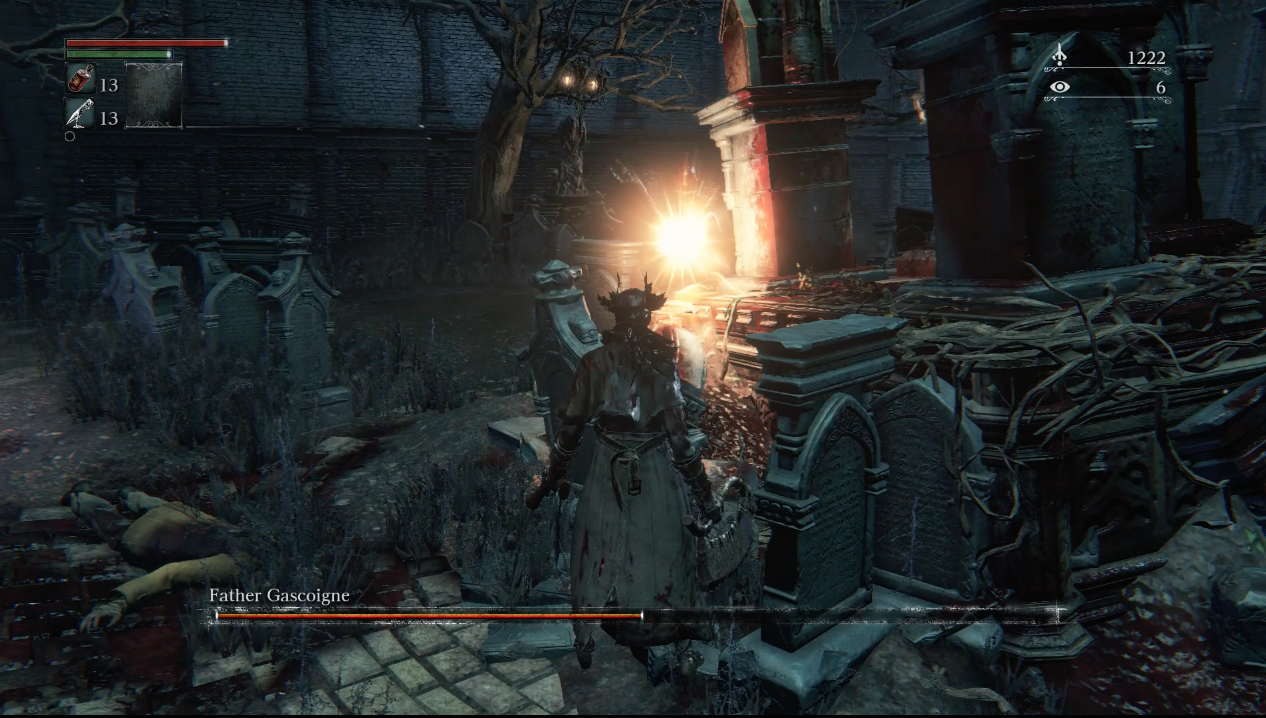
If a boss or a specific section is giving you trouble over and over, there’s no shame in taking a break from forward progress and working on increasing your levels. For example, we recommend dealing with the second boss, Father Gascoigne, at Level 20, though you can try to fight him at lower levels. Level farming in the sewer area is slightly better than gaining levels from townsfolk. The creatures in the sewer move slower and are easier to manage.
15) Increase your defense, look like a Hunter
If you progress far enough you will eventually come to a large sewer network. Thorough exploration will reward you with the first set of new clothing: hunter gear. Not only does this make you look like the Hunter in the trailers and box art, it more importantly increases your stats, double in some areas. This serves as a reminder that you should make every attempt to retrieve the glowing items from corpses.
If you miss this, you’ll have another opportunity to find another set of similar gear after defeating the second boss. Obviously, having this before encountering the second boss would be a huge help.
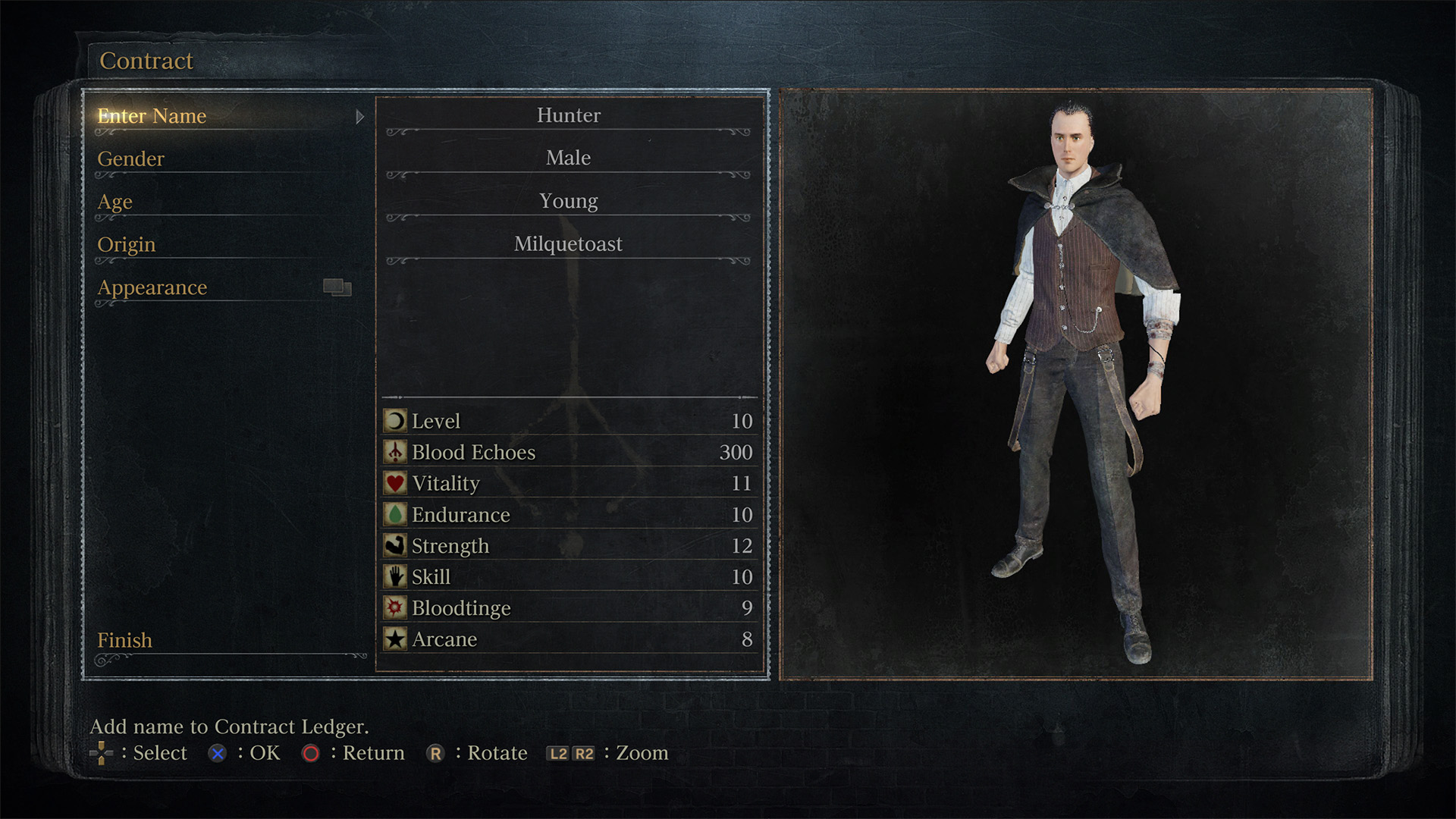
Bloodborne is not your typical action RPG in that it doesn’t distinguish its heroes based on class, but rather how their upbringings have shaped them. Known as origins, these categories are analogous to classes in that they vary widely in determining your starting stats. These origins only vary by statistics. No one class is supplied with any additional gifts, items, or gear. The only exception is the bold hunter’s mark, which is given to every origin. It should be noted that gender, age, nor appearance has any bearing on your stats or abilities.
How you shape your character from this point is up to you. As you level up, you can further customize those stats however you see fit. If it turned out you wanted your noble scion to improve his modest starting physical attack stats, you can spend the next 10 levels increasing strength. You can create your own mental narrative, where a hunter with a violent past now has the maturity to temper his aggression by focusing on upgrading stats other than strength.
One of the challenging aspects of choosing an origin in Bloodborne is that a couple useful stats are withheld from comparison until after you commit. HP, for example, is determined by vitality, while endurance determines stamina. Another stat is discovery, which determines the frequency of enemy item drops. Looking over our guide will show you which origin has greater discovery over others.
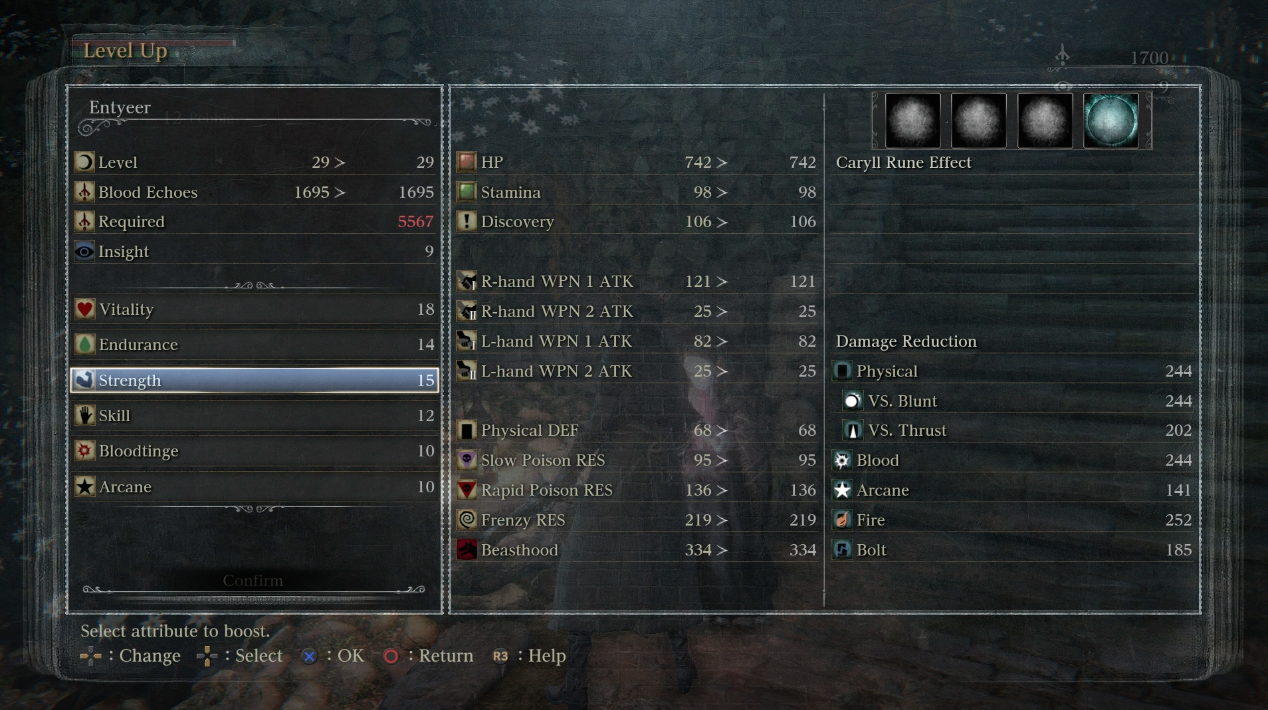
Like the Souls series, upgrading one primary stat increase various other stats. Here are some of the specifics:
Vitality: Increases HP and Physical DEF
Endurance: Increases Stamina, Physical DEF, Slow Poison RES, and Fast Poison RES
Strength: Increases R-hand ATK and Physical DEF
Skill: Increases R-hand ATK and Physical DEF (and also increase the potency of secondary offensive items)
Bloodtinge: Increases L-hand ATK and Physical DEF
Arcane: Increases L-hand ATK, Physical DEF, and Discovery
Bloodborne Origins
Milquetoast
If you lived or admired the life of a middle class upbringing, you can project that middle-of-the-road outlook through the milquetoast origin. No one stat is exceptional, nor are they notably low. If you are a beginner who wants to be well-rounded, but doesn’t want any special treatment with increased strength, go for milquetoast.
Lone Survivor
As the name implies, this class is high in vitality. No matter what genre you play, if you’re the type of play who chooses to boost their HP first, you should like the lone survivor. It has the highest starting hit points out of any class at 659. By comparison, the well-rounded milquetoast only has 594.
Troubled Childhood
It’s likely that someone from a troubled childhood has experienced unspeakable events not unlike that of the lone survivor. This would make a great symbolic pairing in co-op in the name of shared experiences and bonding over the mutual hardships within Bloodborne. Where the lone survivor is average in endurance and skill is made up by partnering with someone from a troubled childhood. If you’re in a co-op session and are dealing with an enemy that deals slow potion, someone with a troubled childhood should be at the forefront, given that this hunter has the highest resistance to slow poison.
Violent Past
Whether the hunters who have a violent past were the dealers or receivers of violence matters not. All that counts is that they’re able to take out their aggression out on all of Yharnam’s hostiles, by having the highest starting strength out of all the origins. That’s even higher than military veteran. If you appreciate the close quarters combat of Bloodborne and if you thrive on dealing with the crowd, go with violent past, especially since this class is weak in firearms potency.
Professional
Talented and educated, this origin brings high skill and endurance to the battle. With no shields in Yharnam’s early areas, all creatures great and small will force you to dodge roll often. Having high endurance means having generous stamina to evade enemies, no matter the distance. And if you’re one of those adventurers who finds a lot of value using offensive items beyond the gun and blade, we recommend the professional since his skill makes him adept at items like molotov cocktails and throwing blades.
Military Veteran
Oddly enough, if you’re looking for a version of the milquetoast with a bit more of a kick in physical attacks, we recommend the Military Veteran. It’s one of the more beginner-friendly classes since it’s well-rounded with a strength boost to help you get through the townsfolk of Yharnam. The veteran’s prior experience in battle is the reason why his strength, skill, vitality, and endurance are in the double digits.
Noble Scion
If you picture a military veteran class to be more adept with firearms, you should consider the noble scion. Out of all the origins, this has the highest combination of skill and bloodtinge. You also start with the highest amount of blood echoes: 540. Blood echoes is the game’s version of souls in Dark Souls. If you are confident that you’ll survive, or at least, recover blood echoes after your most recent death, you should be able to make good use of these extra starting allocation..
Cruel Fate
Those born of cruel fate endured many hardships, but those trials have only strengthened their resolve. By choosing cruel fate, you’re picking an origin with some very well-spread stats, with the exception of bloodtinge, which is low and affects the potency of your firearms. It’s a small price to pay because there is one unlisted stat that makes cruel fate one of the best classes to pick: discovery. As stated above, this stat increases the likelihood of enemy drops. Whereas all the other classes’ discovery starts at 100 or 103, Cruel Fate starts at a whopping 119. If you can relate to a thief or explorer class from other RPGs, choose cruel fate.
Waste of Skin
As the game describes, “You are nothing. Talentless. You shouldn’t have been born. There is no benefit.” Waste of skin is for the true masochist, where the only bright spots are that you’re not deprived of the bold hunter’s mark and you start the game with clothes. If you are that specific kind of Souls series veteran who entertains the thought of beating Dark Souls II with a single dagger, this class is for you. It’s the “bragging rights” class of Bloodborne.
The Blood-Starved Beast has poisoned me. I’ve run out of antidote and health potions, but I’m not willing to die. I’m close… I’m so close… As my health fades, I swing my blade and hold my breath. “Prey Slaughtered” flashes across the screen, and my hero keels over dead. I leap off my couch with a victorious scream.
Look, nobody said Man At Arms had to make weapons all the time. If a shield can be as iconic as the sword swinging next to it, then it deserves its real-life dues too.
The setting of Fossil Fighters Frontier include colorful fictional worlds that are influenced by contemporary life. For example, players control human characters that drive around modern cars and look for clues of fossils in order to bring back to life various dinosaurs and make them fight.